- Article on how certain artists wish to "dance upon the grave" of Soviet decay by looking at physical sites of abandonment or dilapidation in brutalist built spaces. It's not discussed in the piece, but yet this is another symptom of capitalism run amok with no competing ideologies (unless we can call Islamic extremism - better called plain old 21st century fascism - a "competing ideology").
- A very good primer on the Tunisian Quartet, their role in preventing full out civil war in the country, and the reasons they were awarded the Nobel Peace Prize last week.
- In memory of crime-writing sensation, Henning Mankell, who died earlier last week. Mankel was one of those authors whose work I've had on my list for years and years but never got around to reading anything (though I know his reputation and have read much about him). Compiling my Christmas reading list now and he'll certainly be there.
- You can take a tour of the Si Racha factory in California. One of my personal favorite condiments (I put it in chili, pasta sauce, soup, it livens up most dinner-time fare), I might even consider it if I were traveling out west...just to see the "truckloads of chili peppers" coming in and being unloaded.
- I thoroughly enjoyed this article about why critics are so defensive. In particular, the writer takes down Emily Nussbaum (New Yorker TV critic) and her suggestion that lovers of TV have "won the war." "What war?" the writer asks, suggesting then that feeling proud that TV is such a culturally dominant medium does not, in itself, make it something to praise. I often think about this topic: why no one wants to "poo-poo" any piece of art in public, why there are always "intellectuals" (most usually self-defined intellectuals who don't really understand what it means to be an actual intellectual) who can talk something up, but there are, without a doubt, bad TV shows (most), bad books (many), bad artists (ahem) and bad theatre (praising something or someone because they are the only or the biggest show in town is shockingly common). Let's face it: we can't have good art without lots and lots of bad art. It's easy to find something good to say about most anything, anyone or any piece of art, but when I read a really bad book yet see 10 "this book is brilliant" quotes on the cover, I wonder to myself: does this critic really believe this or is this blurb simply done for political points which are beyond my kin? People praise something for a whole myriad of reasons (though I like Emily Nussbaum's project and some of her recommendations: her love of certain formulaic, simple-minded shows baffles me. Maybe I'm just not that appreciative of TV as an art form overall?) but takedowns can be incredibly fascinating, especially when they are artworks being consistently and seemingly universally praised (see Daniel Mendelsohn's takedown of Mad Men a number of years ago, really calling the entire series into question at a time when no one seemed to want to say anything negative about it at all).
Showing posts with label Soviet Union. Show all posts
Showing posts with label Soviet Union. Show all posts
Saturday, October 10, 2015
Smug celebrations of Soviet decay, the Tunisian Quarter's Peace Prize, Si Racha factory tours, defensive critics: Cultural Digest October 10


Tuesday, October 23, 2012
Collum McCann's Dancer
Collum McCann's novel Dancer is one of those books which has sparked my interest in another subject. You know how you can sometimes read a book and be perfectly happy to remain in the world that the writer creates? It wasn't the case here and I have found myself several times in the last week, finding other sources of information on the subject online, in bookstores. The novel tells the story of the life and career of Rudolf Nureyev through various narrators who were close to him throughout his life. McCann writes with lyrical beauty and some passages are simply gorgeous, particularly passages about dance itself, about St-Petersburg, about the protagonist and his larger-than-life personality.
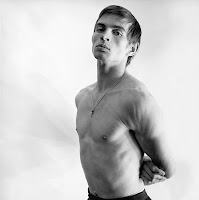 The hitch with books of this form is a niggling one that I can't get away from as I read: the constant question of what is made up, what is based in fact, and whether that's even important. After all, a life story is not a life. I can see that McCann must have done an enormous amount of research because the story is definitely grounded in facts which span Nureyev's life. The people are real. The experiences reflect the arc of the dancer's career. It's much more like a novel, of course, with invented scenes, dialogue, thoughts and feelings. But McCann doesn't change names, re-imagines real stories from Nureyev's life to move his plot along. In that sense, it's like a biography.
I find the book so interesting that I stayed up late watching a Youtube video about Nureyev's life, his Russian years, and this only piqued my interest more in this enigmatic indvidual. Though his life ended tragically, we should all be so lucky to be able to do what we want in our lives, to focus all our energies to one consuming, passionate goal and then reap its rewards.
It's the first book I've read by McCann but it definitely makes me want to read more of his work.


I find the book so interesting that I stayed up late watching a Youtube video about Nureyev's life, his Russian years, and this only piqued my interest more in this enigmatic indvidual. Though his life ended tragically, we should all be so lucky to be able to do what we want in our lives, to focus all our energies to one consuming, passionate goal and then reap its rewards.
It's the first book I've read by McCann but it definitely makes me want to read more of his work.

Subscribe to:
Posts (Atom)