Showing posts with label film. Show all posts

Tuesday, March 15, 2016

Art and our Fears: The Witch and Bus Stops

I saw two events last week that  both seemed to explore our fears as a society but from very different eras and it's been something on my mind all week.

The first piece was the big high profile movie, The Witch, which has been playing for a few weeks. No fan of hardcore horror, I was a bit reluctant to see it but the setting - 15th century Massachusetts - was appealing. It's a very interesting movie though not really a horror film at all in most ways and the way it was marketed was very misleading. The film tells the story of a family - parents, two boys and two girls as well as a newborn baby - who are kicked out of their religiously oriented village for heresy (the father is preaching his own brand of Christian doctrine) and are exiled to the wilderness. They set up their farm there, isolated, next to the woods and things continue until one afternoon when the newborn simply vanishes. It's assumed that a wolf came out from the woods and took him away but there are suggestions of something darker.

What struck me about this film is how we forget today how the word evil used to represent an actual thing: actual spirits or the devil himself. For us, the word evil is used more metaphorically to suggest almost always a person who acts in selfish or incredibly self-serving ways that somehow cause harm to others or society. So we say that a serial killer or terribly manipulative person or someone who exploits the poor, etc., we say those people are evil. It's more about the lack of social empathy or the fact that the person can't act in a way that we accept as normal social behaviour. But in the world of 15th century America, evil was an actual thing that existed. It had little to do with social interaction or being selfish or not understanding how to act in accordance with mores of the day. Evil actually resided deep inside the forest, was a thing or a person that simply meant to cause disorder in the world.

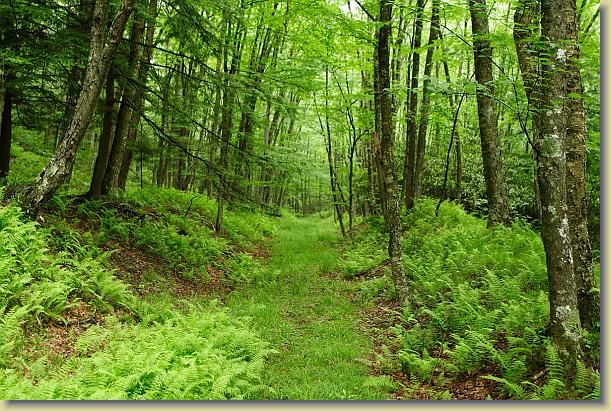
It also struck me that it's so surprise why forests have long been so frightening to people. Today,
forests are almost like the last remnant of the nature we have managed to tame and control. But 500 years ago (and throughout most of human history), forests were terrifying places: full of wild animals and very easy to get lost in. People probably very often did enter forests and never return simply because they were so vast and dark.
The Witch is a good film but it's not a horror film and anyone who goes expecting this will be disappointed. It's a film about evil but also about the fears that we as a society cultivate: in our children, in each other.

I then saw Bus Stops at the Centaur and though the pieces on the surface are very different, they both share commonalities in terms of showing us what we fear. This play, translated from the original French, was written by Marilyn Perrault, and simply shows a collection of various urbanites all killed in a terrorist attack on a public bus in Montreal. The story is framed from the point of view of a coroner trying to piece together what happened after the fact via her imagined interaction with several of the victims, trying to separate the public hysteria from the facts.

The acting was spotty at times  (I saw the opening show so maybe it's gotten better: some players are solid; others were less so) but the play is good, the writing is interesting and engaging and the production itself is innovative and entertaining. But again, the play shows us what we fear as humans: we fear the "unknown" terrorist. Evil. But this kind of evil operates in a vastly different way to the evil in The Witch: this is social evil, people who act in selfish ways that harm others for some bigger political or personal axe to grind. It also gets at another fear: the tendency we have to scapegoat people for crimes because of racism or prejudice.

The Witch is playing downtown for the next couple of weeks and is worth a couple of hours though it's not a fast-moving film in many ways. It's dreary and sad but also scary. The script, too, is written in a very dated English so it's not always easy to follow the dialogue. But it's a good film and gets at the heart of what evil used to represent.

Bus Stops plays at Centaur through March 27 and is a very engaging story about our modern contemporary fears of evil.

Saturday, November 28, 2015

Michael Cunningham's new one, Muji Flagship story in NYC, German photographs from 1900, Image+Nation starts this weekend: Links of Note

Germany in 1900

Elizabeth Bishop biographical documentary at Image+Nation

Friday, November 27, 2015

Que Horas ela volta? / The Second Mother by Anna Muylaert

I think it's too late to see it in theatres, but maybe it'll be available on DVD soon, this film really blew me away. I saw it a few nights ago at Cinema du Parc and I do have to admit, that I have a particular fondness for Brazil films. I don't know why exactly since I've never been to Brazil nor do I speak Portuguese (I also like Brazilian writers), but I suppose it has to do with the vast differences between a country like Brazil and Canada (the heat, the chaos of it, the warmth of the people).

This film tells the story of a wealthy family and their maid, Val, in Sao Paolo and what happens when the maid's daughter, Jessica, comes from the north to stay with her mother before she takes the entrance exams at university.

The contrasts of class are stark and it takes the daughter's presence to make them apparent: her mother is outraged that Jessica refuses to know her place as the maid's daughter, in this kind of class limbo-land, asking to sleep in the guest room, letting the teenagers drag her into the pool. The wealthy wife, too, recognizes the class distinctions and wants to maintain them but she also sees the fact that her husband is very attracted to Val's young beautiful and very intelligent daughter. A complicated arrangement results and is even further complicated by the relationship between Jessica and the teenaged son of the family.

The film exposes the lie that domestic servants are "part of the family" as they aren't, really, and it takes someone shaking up the strict protocol that is so present in this kind of relationship for everyone to feel ruffled, uncomfortable, out of sorts. Oddly, it's the men in the family who don't seem to be so affected by the class rifts, but there's also sexual attraction there to circumvent those distinctions. Sex trumps all.

It's a really lovely film, full of sensuality and pain, but also hopeful, ending in the way we all hope it ends. I somehow managed to miss the entire Montreal Brazil Film Festival this year (where was I?!) which is unfortunate because last year I saw an incredible Brazilian film there (based on a Stefan Zweig short story). Here's to hoping that Cinema du Parc will continue to show Brazilian films.

On a related note, very sad to see that Cinema Excentris has closed. Apparently it's a temporary closure but we need more repertory cinemas in this city. There's no shortage of film festivals but it's so important to have cinemas that are devoted to less huge films, and more art-house or foreign films. It's sad to see how the film world has become so concentrated on huge blockbusters and there is so little room left for other kinds of film.

But that's a topic for another day.

Wednesday, November 4, 2015

Women Directors and Women in the arts, a Turin stroll in the footsteps of Nietzche, Gouin's amazing houses, On Being with Krista Tippet: Cultural Digest November 4


  • When one considers that women are highly under-represented in the arts, articles like this are very important: A Hundred Women Directors that Hollywood Should Hire. This is always such a hot topic: women in the arts. A huge proportion of women working in the arts are women: marketing people, Festival people, fundraisers, etc. Yet sometimes I have to consciously make the decision to read something by a woman as most "literary" writers are still men. Not all by any means, but if one just read what came across one's desk, it would be easy to read books by only men. And this is one thing I think we do well at Blue Met: create events with, give prizes to, promote the writing of women. 
  • A Turin stroll in the foosteps of Nietzche. I may take this stroll in the spring as I think I may try and go to the Turin Book Festival in May to meet various people. I've spent a good deal of time in Italy the last 18 months and I will again in 2016 but I've never been to Turin...I love exploring new places that are linked to literature in this way. After reading the article above, I was surprised at how Nietzche died...
  • Beautiful historical houses in Montreal along boulevard Gouin. This is an area of Montreal I don't know well but the houses sure look beautiful. Or did. (The link's story is in French).
  • I've been listening to this show on the radio (well, online) lately: it's fantastic. It can get a bit touchie-feelie on the corresponding blog (something I rarely appreciate) but the show itself with Krista Tippett is incredibly smart and thought-provoking. Some recent shows include Jonathan Sacks, the former Chief Rabbi of Great Britain on The Dignity of Difference and another recent show on the work of American poet Mary Oliver.
Jonathan Sacks: On Being

Tuesday, September 1, 2015

Parabellum by Lukas Valenta Rinner

I love movies that raise more questions than they answer. If I walk out of a film with a satisfied, resolved sense that all is right with the world, then chances are, I will simply forget the movie unless there is something very special about it. But yesterday at MWFF, I saw the former kind of film: one that caused a whole host of questions. It was an Argentine/Uruguayan/Austrian film called Parabellum.

The film is odd. Very odd. It opens in Buenos Aires where an office worker at first seems to be going through his day but very soon it becomes clear that he's getting ready to move or leave. He gets rid of his cat, removes stuff from his office. There is no conversation about this. No voiceover. Just a man's actions that we are supposed to interpret. Cut to the woods and a kind of resort full of other people from the city: everyone is given a uniform and various options for courses: water survival, combat, guns and shooting, etc.

It turns out that the resort is a survival camp and all these city people are training for kind of impending doom or apocalypse. This sense of tension infects the movie, you're waiting for something to happen...meanwhile, rockets or missiles or maybe asteroids keep flying through the sky and exploding somewhere in the distance.
Gorgeous Argentine countryside is a main character

The aspect of this film which is hard to get your head around is the fact that there is very little dialogue: the characters are almost like robots, doing what they're told to do with no emotion whatsoever. There are no characters to hang your expectations onto.

But these facts really make you think about what it is to see a movie: how the emotional component of a film is really key to connecting with the audience. Emotion is almost the starting point of any film. But not here. No characters. No emotion. One almost asks oneself if this is even a film?! Of course, it is, but it's unlike any film I've ever seen.

As I walked out, I just kept asking myself: what just happened? What was that about? What did that all mean?!

Parabellum is the first feature film by Austrian director Lukas Valenta Rinner. Unfortunately, the film only plays once more Tuesday, September 1 at 11:30am...

I love film festivals! At work this week so limited time but I'm trying to squeeze in as many as I can.

Friday, August 14, 2015

The Bicycle Thieves

As part of Montreal's annual Italian Week, I saw The Bicycle Thieves last night at Cinema du Parc. It's one of those films that I've known about and heard about and read about but never actually seen myself (I vaguely remember renting it once a long time ago but I never watched for some reason).

I can certainly see why the film is considered one of the best films ever made. Wow. So much going on in this rather straightforward tale of a family man on the hunt through the streets of Rome for his stolen bicycle. Set in the immediate afterman of post-WWII Italy, the film is a master of understatement: the class issues are front and centre, of course, but the civil unrest and the images of authority and power and how they influence(d) the lives of ordinary Italians stand in the background and make up some of the most interesting things about the film.

I've spent time in Italy and only just returned, in fact, from a work trip there a few weeks ago and, naturally, much has changed. Yet much remains the same: Italians are not poor or living on the edge, but there is certainly poverty there (though it often remains relegated to immigrant communities). Of course, the church doesn't have nearly as much power as they did 70 years ago, but they are still front and centre in Italian society.

I'm certainly no expert on Italy or the Church or immigration to Europe, but these thoughts were ever present as I watched this seemingly simple tale, moved by the pain of an honest man sincerely trying to do his best for his family. (Incidentally, it's shocking how parenthood has changed! He lets his 7 year old son take the street car all alone and the kid actually has a job working in a gas station!)

There is little tenderness in the film, particularly between the father and the son, though in the final scene, there is a moment when all the pain and uncertainty comes together and the boy reaches for his father's hand. Rarely have I been so moved by such a common everyday gesture. The ambiguity with which the film ends is not totally unexpected or, rather, we know what the ambiguity means.

The film is one of the kick-off events for Montreal's Italian week with events through the 16th of August including other film, fashion shows, food, music concerts and more.


Monday, August 10, 2015

The Tribe

Now showing at Cinema du Parc, The Tribe is a 2014 Ukrainian film, written and directed by Myroslav Slaboshpytskiy. The film is set in a boarding school for deaf kids but a very violent and nearly adult-less school where a small time gang runs all kinds of scams or crimes, from pickpocketing to prostitution to mugging pensioners to running visa scams.

The intriguing thing about the movie is that there is no dialogue: the entire film is done in sign-language but that takes surprisingly little time to get adjusted to as an audience member. Yes, we miss details, but the story arc is clear and easy to follow. Filmed with entirely deaf actors, the complexity of the film shoot must have been overwhelming (see a really interesting Vice interview here with one of the stars of the film).

What a bleak, depressing and dog-eat-dog world. I've been thinking a lot about the notion of power, particularly in how we (as in The West) deal with Russia, and this notion of power, physical power, being the end all beat all of respectability is one that isn't prominent in our law-based society. This thought came about because of an article I read a while back about what we don't understand about dealing with Putin, that power and how he holds on to power, is of deadly importance to him and explains all this visual imagery that is so key for him to maintain this reputation for being a strong man.  Obviously, the way we think about power is complex. But it seems to me that we approach power in a more subtle way in North America: power comes not just from brute strength but also from smarts, street smarts, intelligence and being one step ahead of one's enemy. But here power is open-faced, bloody, raw. There is no question that he who has the power is the one at the top and there is no room for things like diplomacy, intellectualism, or even just outmaneuvering one's enemy.

This is an almost operatic kind of tale, love, pain, betrayal, and murder. And there is no spoken dialogue. Quite an unusual cinematic experience on the whole. The critical reviews have been very solid, people comparing it to The Godfather and reacting to the fact that there are these long takes with very little cutting.

I have to say that this film is one that stays with you; I'm already replaying certain scenes in my mind, trying to work them out, wondering what the director was trying to do and, more importantly, how he did it.

Definitely worth seeing (I was surprised that there were so many people there) but don't see it if you're on the verge of feeling depressed or bleak. It's a dark and angry film though it's fascinating.

The Tribe plays this week and next at Cinema du Parc.


Sunday, February 8, 2015

Kieslowski's A Short Film About Killing at Cinema du Parc

As part of Cinema du Parc's series on Masterpieces of Polish Cinema (presented by Martin Scorsese) this week, I was happy to see that A Short Film About Killing was on their playlist for this weekend. This is one of Kieslowski's early feature films and one that came directly out of his earlier made-for-TV masterpiece, Dekalog.

Dekalog is a series of ten short films (one hour each) that aired in Polish TV in the mid 80s and A Short Film About Killing was originally one of these short episodes that Kieslowski expanded into a full-length film.

I've for years wished that some repertory cinema in Montreal would play Dekalog in its entirety and I've only ever seen in on DVD but the premise is basically that each film is "about" or inspired by one of the ten commandments. So there's a film that alludes to Thou shall not commit adultery and one about Honoring thy father and mother, etc.

The films aren't meant to be explicit treatises on the Ten Commandments and the allusions to them are sometimes obscure or oblique. But it's an excellent series of films and an incredibly interesting time capsule into life in Poland in the 1980s.

I was really happy to see that the Cinema du Parc was fairly full this afternoon when I walked over to CdP (in a blizzard no less) to check out A Short Film About Killing.

The film is constructed in two parts: the first leading up to the random killing of a taxi driver by
Jacek, an aimless street criminal who seems to kill just for the thrill of it. But there are no easy answers: the taxi driver is a bit of a prick and Jacek, too, we learn later, has overcome a major tragedy in his own life. The second act leads up to Jacek's execution by the Polish state but what is not there is just as important as what is: there is no arrest, no investigation, not even any courtroom scenes (though the judge alludes to the defense attorney's speech against the evils of capital punishment, we never see the attorney - his name is Piotr - in action). This act opens with the judge ruling against Piotr and Jacek which starts the ball rolling on his execution. We see the cruelty of state-sanctioned execution but it's not done in any pat or superficial way: one killing leads to another but both are horrific and both are meant to be seen as equally abhorrent. And though there is certainly a political message here, how it's told is just as important as what the message is meant to convey. It's beautifully filmed and I'm so fascinated by these images of Poland in the mid-80s.

Speaking of Kieslowski, I really enjoyed reading Teju Cole's piece in the New Yorker about the director's last film, Red. Though I've always been more partial to Blue, I do find Red one of Kieslowski's most watchable and interesting films.

One of my most favorite all time movies is a Kieslowski movie, The Double Life of Veronica, and I've seen it probably 15 times. But I still get something new out of it every time I watch it and all of Kieslowski's films are at the top of my Criterion wish list (along with Wong Kar wai's In the Mood for Love). I, like Cole, discovered Kieslowski in my early 20s when Red was released and with a bunch of friends I saw a triple feature at the U-District Theatre in Seattle back in like 1994.  I've gone back to all of his films many times in my life and, to me, these films are what cinema is all about.

A Short Film About Killing plays again Monday, February 9 at 7pm at Cinema du Parc so I'd highly recommend it to any fans of "good" films and, of course, to anyone to admires the films of Kieslowski. Maybe CdP will get around to playing Dekalog one of these days or the entire Three Colors series. I hope so.