Showing posts with label QWF. Show all posts

Wednesday, November 20, 2013

QWF Awards 2013

The QWF awards banquet last night was wonderful as usual. But what struck me as I watched the show was how tight the English writing community is. Not coming from Quebec, it's a community that means a good deal to me personally. But to a writer who is writing to his or her peers and hopes for an audience, one could hardly hope for a more enthusiastic and talented group of people.

I appreciate how translators are given a prize each year. Translation is an under-appreciated art and one that is vital in our world today, literary or otherwise. Donald Winkler won the Cole Foundation Translation Prize for his translation of Pierre Nepveu's book of poems The Major Verbs. This is really an amazing collection and Nepveu is a poet whose work I've only recently discovered (though he's one of Quebec's best-known poets). Winkler praised the local community of translators, including his partner, Sheila Fischman.

Paul Blackwell, always dapper in his bowtie and beard, won the YA award for his book Undercurrent. He is charming and friendly though I missed his acceptance speech. I read one of his YA detective novels a few years' back and thought it was fantastic.

Adam Leith Gollner won the Mavis Gallant non-fiction prize for his book Immortality and told a charming story about having oysters with Mavis Gallant in Paris. His book's been at the top of my list since the late summer when I saw him being interviewed by Josh Dulgin at Pop Montreal.

The Concordia first book prize went to Andrew Szymanski, a writer I didn't know about (I
know well the other two books competing in that category). He was the comic highlight of the night, though I think unintentionally...

I was rooting for a friend who was nominated for the AM Klein Poetry Prize, but the winner, Ken Howe, was really funny and gracious.

And, of course, Saleema Nawaz won the Hugh Maclennan Prize for her book Bone & Bread, lovely novel that captivated many earlier this year when it came out. No surprise there.

The QWF banquet really is the highlight of the fall in the literary world of English Montreal. And it's always so great to see people coming out to support their peers, colleagues and friends. And I am proud to be around so many incredibly talented writers, translators, editors and literary professionals.

The Corona Theatre on Notre-Dame: an A+ venue!


Wednesday, November 21, 2012

QWF Awards: 2012

The QWF does such excellent awards banquets: last night they proved the rule with their 2012 awards banquet, held at Lion d'Or on Ontario (which host Josh Freed had couldn't help noting as a sign of how far Anglophones are willing to extend into Francophone territory to exert our waning influence). A few highlights:

Rawi Hage won for Carnival which wasn't a surprise. His books balance urban grit with his idiosyncratic humor and quirkiness. No doubt his books will stand the test of time (his book DeNiro's Game from 2006 continues to loom large over our city as a literary capital). I am glad that Hage took home the prize (and his speech was charming and adorable) but I was also disappointed that I didn't get a chance to see Anita Rau Badami up on stage, an author I adore. Also, I haven't read Hage's Carnival yet so I didn't have a connection to the work in a way I should have.

Taras Grescoe won for Straphanger, a book that I found absolutely riveting. Full disclosure: I was on the jury for this prize, so I am hardly objective (and there will several excellent and worthy books on our long list)  but Grescoe's book has altered the way I look at cars and cities. When certain journalists or writers in Montreal gripe about this road construction project impeding traffic or that new freeway exit ramp, I can just shrug and be thrilled that they're problems I never have to deal with (and I pay absolutely no attention to the price of gas). More than that, the book traces the history of the car on various cities around the world and makes one SEE cities in a new light. I suspect that in 25 years we will look back and know that Grescoe's book was the beginning of the end for the dominant role that the car has played in city life (though that said: even Grescoe admits that cars are important in certain places and at certain times).

Alice Petersen won the Concordia First Book Prize for her short-story collection All the Voices Cry, an excellent collection which contains several lovely little gems. Oana Avasilichioaei won the AM Klein Poetry Prize for her collection We, Beasts.

But the most heart-warming moment all night was when Eric Fontaine won the Cole Translation Prize for his translation of Doug Harris's (excellent) You Comma Idiot (titled T'es con, point). Fontaine's eyes were teary as he got on stage and his list of thank yous was funny, moving and entertaining. He is an excellent storyteller himself, it seems...

And a great evening was had by all!

Wednesday, November 7, 2012

QWF 2012 Awards: Readings

QWF awards event was last night and I saw some excellent readers feature their own work: 

Taras Grescoe read from Straphanger which is a fascinating book on the role that the automobile has played in our cities for far too long. In the book, Grescoe travels to 14 cities around the world and explores what they are doing right and how they could make their cities better, more egalitarian and more people-friendly. It's a hard sell, particularly to North Americans who are so largely attached to their cars and driving. But for those of us who don't own a car (I haven't had a car since I was 20 years old and at the time I sold it because I never drove it), Grescoe's thesis is so intuitive: the car has its place but cities would be better if the car had a diminished role in them.  More than the above, Grescoe is just an engaging and intelligent writer and the book was one I had a hard time putting down.

Also heard Julija Sukys reading from her book Epistophilia, a biography in letters of a librarian who saved countless Jews from extermination while quietly working at a library in the Lithuanian capital, smuggling food and supplies in and out of the Jewish Ghetto. I really enjoyed reading this book, not only because I think the city of Vilnius, Lithuania is one of the most fascinating cities in the world (small, not much happens there, but a rich history and incredibly beautiful) but also because I am all for books which bring an unknown person's story to light, show us someone who should be remembered.  

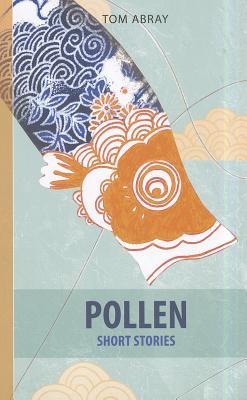
Tom Abray read from his book of short stories, Pollen, several of which I still recall though I read the book last year (or very early this year). His characters are engaging and find themselves in situations that we can almost all relate to (trying to find a daycare for their kid, doing some half-ass renovation project while spending the weekend alone at home). He's a good reader, too, and I wish writers of short stories generally could make a living at their craft because Abray, though young, seems to have a real gift for the short story.

I heard Alice Petersen read from her collection, All the Voices Cry, though I'd heard her read maybe 18 months ago from her book before it was published. Her stories are simply amazing: Petersen comes from New Zealand originally and she has this exotic distance in her language that is quite distinct and unique from other Canadian writers. Her stories are rich with humour and wit. I see a bright future for Petersen.

There were several writers there whose readings I missed because I came late (TD Children's Literary Award Banquet) but the entire roster of 2012 QWF awards can be found here (PDF). Some excellent work being done by our local Quebec Anglophone writers and very happy to be a part of the booming and successful community of creative and intelligent writers.

Friday, October 26, 2012

Carte Blanche #15

For years, Carte Blanche, one of Montreal's best-known literary magazines, has been cranking out issue after issue of interesting, provocative, and funny issues chock full of some excellent poetry, stories and creative non-fiction in addition to artwork. In the spring, they began printing paper issues on demand and the latest (#15), too, is available in print.

The talented Gillian Sze
This has been a real treat the last few days: hanging on to this book on the metro, in line at the bank, reading pieces (and Q&A) by Gillian Sze, a visual tale called "The Wrecked Woman" by Kara Sievewright, poem by Tom Wayman, and many other pieces. It could be a tad smaller (it's printed beautifully though it's A4 size and I'm the type who prefers volumes that can be stashed in a pocket whenever possible) but I've really enjoyed this issue.

The magazine is one of the Quebec Writers Federation's funded ventures and the editors of Carte Blanche also produce a series of spoken word/storytelling events called This Really Happened (one at Blue Met 2012 and another one being planned for 2013). The online issue, in fact, discusses the This Really Happened event they did at Wordfest in Calgary a couple of weeks ago.

They are still working on distribution, it seems, and I can't seem to find the way to receive  the magazine in print online but I think all writers in Canada who want to see small magazines improve and continue to thrive should try and get a hold of it (or ask to see it stocked in your local bookstores while they last!).