Tuesday, March 15, 2016

Art and our Fears: The Witch and Bus Stops

I saw two events last week that  both seemed to explore our fears as a society but from very different eras and it's been something on my mind all week.

The first piece was the big high profile movie, The Witch, which has been playing for a few weeks. No fan of hardcore horror, I was a bit reluctant to see it but the setting - 15th century Massachusetts - was appealing. It's a very interesting movie though not really a horror film at all in most ways and the way it was marketed was very misleading. The film tells the story of a family - parents, two boys and two girls as well as a newborn baby - who are kicked out of their religiously oriented village for heresy (the father is preaching his own brand of Christian doctrine) and are exiled to the wilderness. They set up their farm there, isolated, next to the woods and things continue until one afternoon when the newborn simply vanishes. It's assumed that a wolf came out from the woods and took him away but there are suggestions of something darker.

What struck me about this film is how we forget today how the word evil used to represent an actual thing: actual spirits or the devil himself. For us, the word evil is used more metaphorically to suggest almost always a person who acts in selfish or incredibly self-serving ways that somehow cause harm to others or society. So we say that a serial killer or terribly manipulative person or someone who exploits the poor, etc., we say those people are evil. It's more about the lack of social empathy or the fact that the person can't act in a way that we accept as normal social behaviour. But in the world of 15th century America, evil was an actual thing that existed. It had little to do with social interaction or being selfish or not understanding how to act in accordance with mores of the day. Evil actually resided deep inside the forest, was a thing or a person that simply meant to cause disorder in the world.

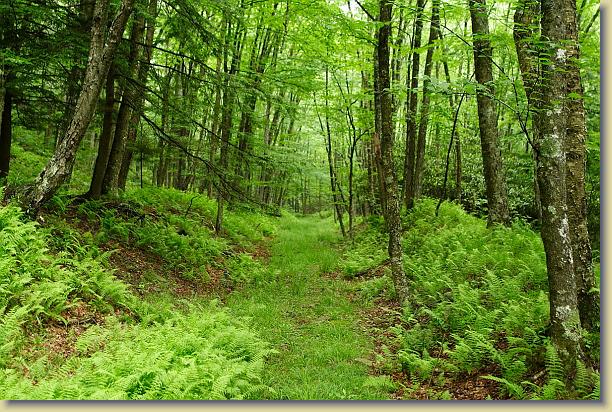
It also struck me that it's so surprise why forests have long been so frightening to people. Today,
forests are almost like the last remnant of the nature we have managed to tame and control. But 500 years ago (and throughout most of human history), forests were terrifying places: full of wild animals and very easy to get lost in. People probably very often did enter forests and never return simply because they were so vast and dark.
The Witch is a good film but it's not a horror film and anyone who goes expecting this will be disappointed. It's a film about evil but also about the fears that we as a society cultivate: in our children, in each other.

I then saw Bus Stops at the Centaur and though the pieces on the surface are very different, they both share commonalities in terms of showing us what we fear. This play, translated from the original French, was written by Marilyn Perrault, and simply shows a collection of various urbanites all killed in a terrorist attack on a public bus in Montreal. The story is framed from the point of view of a coroner trying to piece together what happened after the fact via her imagined interaction with several of the victims, trying to separate the public hysteria from the facts.

The acting was spotty at times  (I saw the opening show so maybe it's gotten better: some players are solid; others were less so) but the play is good, the writing is interesting and engaging and the production itself is innovative and entertaining. But again, the play shows us what we fear as humans: we fear the "unknown" terrorist. Evil. But this kind of evil operates in a vastly different way to the evil in The Witch: this is social evil, people who act in selfish ways that harm others for some bigger political or personal axe to grind. It also gets at another fear: the tendency we have to scapegoat people for crimes because of racism or prejudice.

The Witch is playing downtown for the next couple of weeks and is worth a couple of hours though it's not a fast-moving film in many ways. It's dreary and sad but also scary. The script, too, is written in a very dated English so it's not always easy to follow the dialogue. But it's a good film and gets at the heart of what evil used to represent.

Bus Stops plays at Centaur through March 27 and is a very engaging story about our modern contemporary fears of evil.

Tuesday, March 8, 2016

Blue Metropolis 2016 lineup announced March 22

Some really exciting stuff coming up in April as we finalize the details for the 2016 Festival. As usual, we are at Hotel 10, on the corner of St-Laurent and Sherbrooke and on March 22 at 11am, we announce our entire 2016 Festival program including:


  • Our Grand Literary Prize (past winners have included Mavis Gallant, Richard Ford, Norman Mailer, Joyce Carol Oates, A.S. Byatt, among many others)
  • Our Premio Azul for Spanish-language writing (past winners: Junot Díaz, Luis Alberto Urrea, Sergio Ramirez)
  • Our First Peoples Literary Prize (last year's winner was poet Annharte)
  • Our Words to Change Prize, a prize which honours a writer whose work connects communities (last year the winner was Gene Luen Yang of superman fame!).
We also have a long list of big name writers coming in from 10 countries, exploring all kinds of fun, smart and engaging topics.

The Festival runs April 11 to 17, 2016!

Stay tuned for March 22 when tickets go on sale!


Open Door by Iosi Havilio

Though he was at the Festival a few years ago, I came across Iosi Havilio's novel (translated into English in 2011), Open Door, which is such an excellent read.

The book is set in Argentina and gives us a glimpse into an unnamed narrator who returns home after a jaunt out in a northern village to visit a sick horse (she's a veterinary assistant), meets up with her girlfriend who suddenly disappears. The women are clearly having problems but when Aída goes into a shop in La Boca to buy cigarettes and never comes back out, a mystery of sorts opens up. In the short time after Aída goes into the shop, a person (maybe a man, maybe a woman) is on a bridge high above, surrounded by police and others trying to talk him or her down. A crowd gathers to watch and goad and click their tongues and when it seems that the person is, in fact, being talked down, suddenly the individual jumps and falls to a presumable death in the water. The central question is: was this Aída or not?

To call this book a thriller would be wildly misleading and, in fact, the best part of the book is the muted emotional response of the protagonist who goes on with life with almost no emotional reaction. She loses her job, and then without any explanation, returns to the village up north where she'd been visiting the sick horse the week before. There she falls in with an older man named Jaime and she becomes obsessed with a local teenaged girl who lives in the village.

It's such an austere story in many ways, mainly due to the lack of any kind of emotional response from the protagonist: she never reflects back on her life, her past, we know little to nothing about her childhood, her parents. All she does is push through life with no particular impulse driving her except sex (and even that is relatively infrequent). Occasionally, a phone call will come in from Buenos Aires, asking her to return to identify a body that's washed up but our heroine constantly ends up shaking her head. Where is Aída?

Sometimes a writer will come to the Festival and though I try to read as many Festival books as I can (I did read this 2-3 years ago), I will read it quickly without really revelling in it. Mainly that kind of reading is "trying to get a sense" of the book so that I know how to use the author. But it's in the months or years after the Festival that I will have time to read for the story, to revel in the language, to enjoy it.

Saturday, February 27, 2016

El Club by Pablo Larraín

Saw this Chilean film, El Club, and wow. One of those films that you find your heart racing and you're on the edge of your seat. It's not suspenseful. The violence is fairly muted (hardly a horror film) but yet after it, I felt worn out and kept asking myself: What the hell just happened?!

The film centers on a house in a remote village along the coast of Chile where five priests live with a nun. Early on, it becomes clear that the priests are there as a form of punishment/exile, some have been there for decades, and as the story unfolds we learn about their shocking, appalling crimes.

So many themes to think about: repentance, social class, defying your nature, what it means to forgive, what it means to forgive yourself, scandal, being an "other"... When a new priest arrives, he upsets the delicate balance and more priests arrive to investigate.

The final 20 minutes of this film are some of the most riveting and electric minutes I've ever seen in any film. Though the story itself is rather tepid, bleak, depressing even (not a good film to see on a dreary winter day as I did), the psychological drama that beats at the core of this is absolutely thrilling.

Don't see this if you're feeling sad or low or sick of bleak winters. Do see it if you love good and complex film.

Pablo Larrain, the film's director, also did the film 2012 No with Gael García Bernal but wow what a different energy he brings to this one.

El Club plays at Cinema du Parc in Montreal all week.

Tuesday, February 16, 2016

Claude Jutra: scandal vs achievement

Allegations in an explosive new biography of Claude Jutra suggest the master filmmaker was a pedophile. It is, perhaps, hard for those not familiar with the film world of Quebec how damaging the allegations are for a man considered one of Quebec's most exportable "true" artists.

It's impossible to underestimate the importance of Jutra to Quebec: not only are the major prize awards for film here named after him, there are squares in his honor, streets, parks, a house in Montreal (where he once lived) that's designated as an historic building because of his association with it.

Jutra made some extraordinary films. His best-known, Mon Oncle Antoine, marked a watershed in Quebec's cinematic history as it really became the first big international Quebec hit (not mainstream hit but a critical masterpiece and still widely discussed in the film world). And many others followed, films which in Quebec are part of our cultural literacy.

I've always found Jutra an essentially tragic figure and whenever I find myself walking through
Square St-Louis (where he lived and worked), I feel his ghost there. He committed suicide at age 56 by jumping off the Jacques Cartier Bridge into the St-Lawrence River, doing so because he felt that he was developing Alzheimer's disease.

For now the allegations are not proven and the biographer claims that his book is not about pedophilia (he claims that Jutra liked boys in their mid-teens) but this has still rocked the film world with committees being formed to explore the allegations and whether they are true.

To me this gets at the age old question: does a "great" artist actually have to be "great"? Even if the allegations are proved to be true, do they circumvent all his artistic achievements? I say they do not. Of course, naming parks and streets and squares after someone who did abhorrent things is problematic, but they are not named after him because we all assume he was a saint or even a particularly "good" person. They honour him because of his (in this case) artistic abilities, influence or merit. Just as politician might be honoured for his contributions to a city or province or country, even while doing terrible things in his personal life, we are often unable to hold contradictory or even complex portraits of people in our collective consciousness, especially of artists.

A great artist & a creep. The two aren't mutually exclusive
I want to argue that there is an immediacy to this kind of question that doesn't exist for more historical figures (many of whom were horrible people) but then I can also come up with examples of places or dorms at universities being renamed once it becomes clearer to the public what kinds of things those people did, even if that person lived hundreds of years ago.

It's so complicated: what kinds of crimes are unforgiveable (I don't mean legally or morally unforgiveable here)? What kinds of sins do we shrug at and move on from (there was a time when being gay was looked at as enough to strip someone of all his achievements) and which are simply too appalling to be looked past - or indeed, not even looked past but acknowledged as being part of a complex,messed up and contradictory person.

Then again, generations and generations of women were never acknowledged in any similar way (their achievements were ignored or the vast majority of them were simply never given any opportunity to achieve in the formal way we most appreciate).

I don't know if what the biographer says about Jutra is true. Either way, it won't change the way I feel about his films. It won't make him a less tragic figure for me, wandering those streets of Montreal as his mind was slipping away. But I didn't know the man. He didn't have any personal influence on me because I don't know a thing about him as a man; all most of us have is just a glimpse into his artistic vision. Is it possible to honour that without assuming we are honouring the man himself?

I don't have any answers. I just find this entire topic so very sad...

Friday, February 12, 2016

Random Friday Links: Carole King's Tapestry, Gabriel Garcia Marquez, New Canadian Kids Books, Cheapest Places to Travel

Cartagena: home of Marquez (cheap in January)


Wednesday, February 3, 2016

On Mean Writers

I've been thinking the last several days about what it means to be a mean writer in the context of a literary Festival.

People often ask me for "gossip," for which writers are nice, which are awful, and the truth is that most writers I've dealt with throughout the years are kind, lovely people. I can think of many who stand out as particularly kind.

Some are kind on the surface but say horrible things to other people or treat other members of the
staff badly. Unforgivable.

Some are just plain horrible people.

No I'm not going to name names, as much as I'd like to!

But it intrigues me how someone can travel for hours by plane as a guest and then be awful: rude, cutting, patronizing or just plain mean.

I get that people have bad experiences. People don't like hotel rooms. Flights get delayed. People might be having personal problems that are interfering with their professional lives. I get all that.

But some people are just plain mean. And why is it that these are the writers I remember: the very small number who were unpleasant.

One writer threw a fit because she hates Laguardia and insisted that she didn't want to fly through it. Since I don't control airlines and since Air Canada tends to fly almost all their flights through LGA, I tried to explain to her that we don't have a private jet to fly her to the Festival. Still she arrived, strumpy and furious and complained non-stop about everything from beginning to end. She had not a single nice thing to say about anything. She hated the weather, the hotel, her events, the food, the neighborhood we were in. I was so happy when she left.

I can think of several like this...
Another writer insisted (before he even arrived in Montreal ) that he couldn't possibly spend a free afternoon in town and wanted to fly back home as early as possible. When we explained that Montreal had New York flights early in the morning and in the early evening and almost none in the middle of the day and that perhaps he might head out of the hotel and explore the city for a few hours, have lunch, see a movie (he had like 4 hours to kill and he could have even stayed in his room if he'd wanted), he smiled and said OK that's fine. Later, I found out he called everyone in his class scheduled for Sunday morning, asked them to come in early (only a few of whom could), met with them very briefly, rescheduled his flight and left. WTF?!

Not to say that we're allergic to complaints: sometimes people do have legitimate things to gripe about. We sometimes mess something up. With 200+ events and 200+ writers coming in, we mess things up every single year. No question. Again, 95% of people are kind and forgiving and understanding when this happens. One writer complained to me after his event that the producer didn't show up and that his event went off terribly and no one seemed to be in charge. That happens. Understandable once in a while. But what I felt horrible about was how it made him feel: it was his first book and he said he felt like we just didn't care about him, that he was unimportant and not even important enough to plan his event properly. Ugh. Words like that kill me because I never want any writer to feel that way.

Still: that writer didn't throw a fit or act rude or scream and yell. He was professional. He told me (after some prodding though he did tell several other people and I heard about it later). We chalk that one up to lesson learned and try to do better.

One other thing about mean writers: if you're mean, you get a reputation. There are writers I would
Inspired by Meanness
never invite back because they were so awful. I wouldn't read their book. There have even been a few writers whose work I liked a lot but after they left, I had to bring their books into my office because I couldn't stand my eyes falling on their book at home and remembering how horrible they were. And Festivals know this: there are writers who are known to be horrible, who are known to cancel at the last minute, who are known to show up drunk or high.

But it works the other way, too: writers whose work I didn't necessarily like that much until I met them and found them so charming and kind and friendly and then became a fan. These writers also get a reputation and I'd rather have 25 kind nice and unfamous writers at a Festival than 25 awful boors. Always.

One thing I've noticed: generally the big writers are nice. I think it's not a coincidence. If you're nice, word spreads and other Festivals invite you. I get far more pitches than I can possibly handle each year and if I have to choose between two books or writers and one is known as being unkind, forget about it.

I am not much on trite one liners or self-help maxims. But one thing is true: Being nice is always a good idea no matter what line of work you're in. Maybe some people think being unkind makes them seem smart or better than everyone but it has the opposite effect. People might kow-tow to your face or you might get what you want, but people remember being disrespected and that comes back to haunt you sooner or later.

Be nice!