Showing posts with label Joseph Roth. Show all posts

Tuesday, November 3, 2015

Fall Reading and Why it's such a challenge.

So hard to find the time to blog this time of year. Lots of events each night: readings, discussions, interviews, cocktails, going away parties, welcome to Montreal parties.

I always find the middle of autumn the hardest time of year to read. Since I've been doing this Festival for five years now (six festivals in total including the next one), I get into this "reading rhythm": I read all summer and well into September. Then in early October, time just seems to speed up and I go from 6am until 11pm every day with work stuff.

Last night three events (I made one, made an appearance at another and had to bag out of the other
one). Tonight two events. Tomorrow two events, etc until early December it will be this way.

No, I don't go to every event but I go to at least 2-3 a week. Which is a lot!

I still read at this time of year but I have to squeeze it in here and there, on the subway, waiting in line, on the weekends.

And I do manage to read, just not nearly as much as I usually do. I need to read: this is the time of year I am reading Festival authors and planning events.

Once Christmas is here, I read a lot and well into January. Then I start reading non-Festival authors after that until the Festival (I don't want to read a book by an author coming and then realize I've missed something interesting about their work, something I could have planned an event around).

From January until April I read books of interest but I am so worn out at the end of each day that even then I read much less than usual. Some evenings on the metro going home, all I have the energy for is staring into space.

After the Festival, I swear I'm going to take a vacation from reading, go 2-3 weeks without reading anything. This lasts about two days and once spring is here, I'm back to reading like mad until the autumn again.

Lately I've been reading:

Will Aitken's Realia. It's too bad Will isn't better known as a novelist because his books are so interesting. And funny. This one is set in Japan in 1980s and tells the story of an Albertan woman trying to find her place there.

Neil Smith's Boo. Odd little book. I'm enjoying it but I can't help but wonder if this was Smith's idea of "riffing" off Alice Sebold's The Lovely Bones. It's funnier than that book, much much funnier, and, in fact, it's a much better book, about a boy who's died and is telling his parents about life in heaven. (I've only reached about 1/3 of the way through it so that's the story so far).

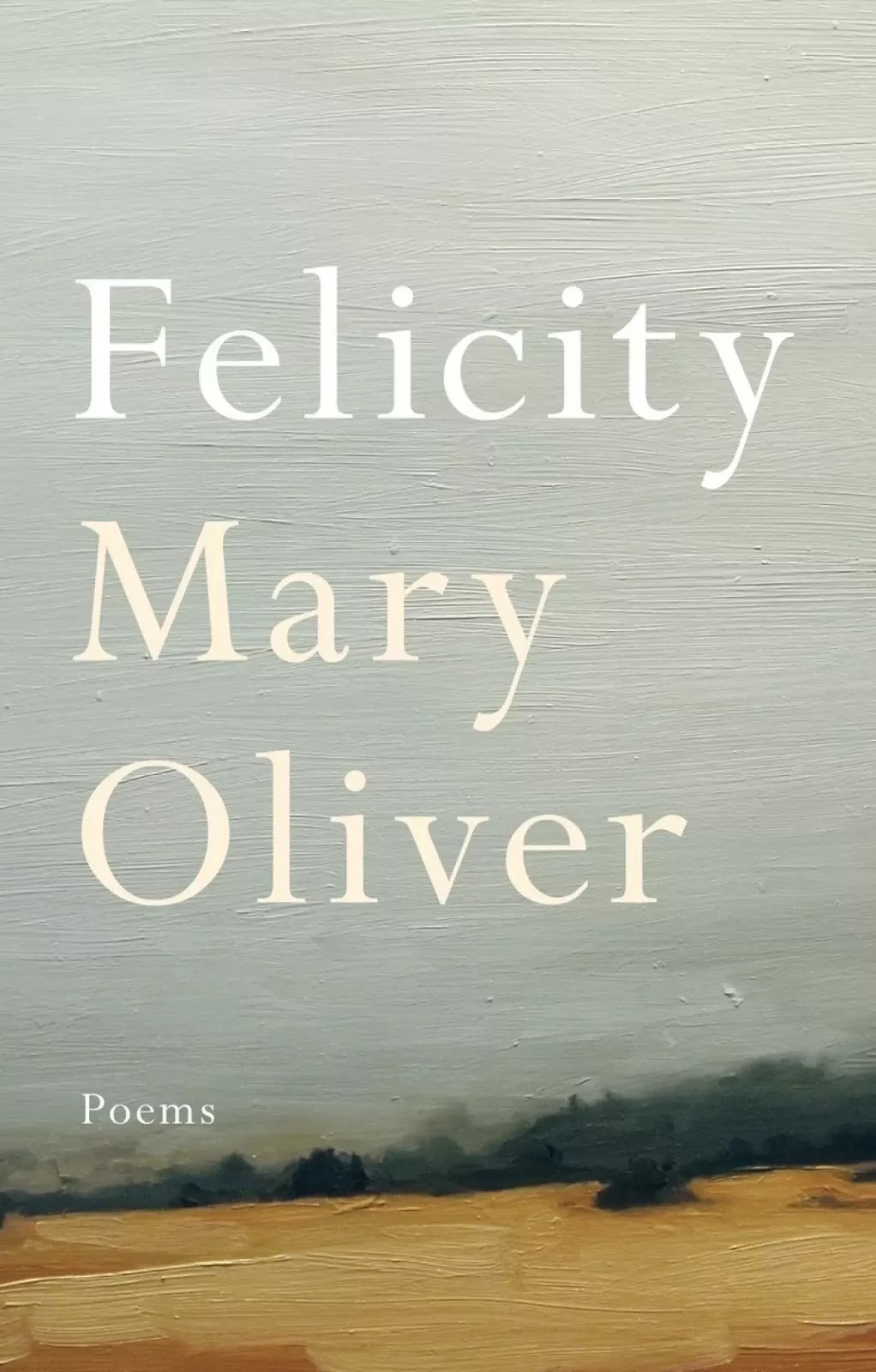
Mary Oliver's Felicity. I love these poems. They are so simple and short but on the third or fourth reading, they suddenly open up and their complexity blasts you in the face.

Joseph Roth's The Hotel Years. I am a huge fan of Roth and I read one or two stories from this each night before I sleep. The little stories, newspaper articles that Roth wrote between the wars as he traveled from one European city to another, predict the calamities that waited for Germany, France, the future Eastern Bloc. But the power in these vignettes reside in the small moments: the angry German youth, the Jewish peddler, the prostitute. They are such humane and beautiful little snapshots of life.

That sounds like a lot but when you figure I can usually only find an hour or so total to read this time of year, it'll take me a while to get through the above books.

Plus I'm on a jury now and I just got a new library of five short-listed books that I have to read by the end of this month. More about that later.

I don't have any kids. How people with kids while working full time ever manage to get any reading done is a miracle.


Thursday, August 27, 2015

Poetry attire, David Foster Wallace on audiobook, Joseph Roth, Fictionalizing Life, Gamache is back, World Press Photo and Film Festival Opens in Montreal: Cultural Digest August 27

Thomas Hirschhorn,  Subjecter (News-poetry), 2010

Gamache is back

Wednesday, August 26, 2015

Helping Syria through soup, Joseph Roth in hotels, Mona Lisa's grin, book covers in Weimar Era, Montreal's Chinatown: Cultural Digest August 26


Friday, March 15, 2013

Odds and Ends as we gear up to release our 2013 schedule!

Our official press conference is on March 26 at 10am at Espace Lafontaine in Park Lafontaine. We will release our entire 2013 line up and tickets go on sale. Buy early this year because last year most of our key events sold out before the Festival began!

My reading habits change at this time of year: I now stop reading for the upcoming Festival and start focusing on the next year! Already I have a big stack of books to get through as we do pre-planning for 2014, particularly since we want to have at least six big name authors confirmed before the beginning of May.

Been slowing making my way through Joseph Roth's Collected Stories which I am loving. The more I read Roth, the more I develop an appreciation for what a poet he was, what a master of language. I can't recommend his books enough. He has such a sensitivity to the lives of the downtrodden, the underdogs, the voiceless. He's just as concerned with the lives of the poor as he is the lives of the rich and powerful but in a way that brings their experiences to life. He's not a social reformer like Dickens (or Hugo, see below) but shows a real interest in these experiences and the individuals who live them.

I found the story "The Blind Mirror" absolutely captivating. In the story, Roth shows us the life of a young woman as she tries to make her way in the world. Here Roth reflects on the night:

Night is full of feeling and surprise: out of the blue, longings come to us, when the distant whistle of a locomotive catches in the window, when a cat slinks along the pavement opposite hungry for love, and disappears into a basement window where the tom waits. There is a big starry sky above us, too remote to be kind, too beautiful not to harbor a God. There are the little things close at hand and there is a remote eternity, and some relation between them that escapes our understanding. Maybe we would understand it, if love were to visit us; love relates the stars and the slinking cat, the lonesome whistle and the vastness of the heavens.

The lyrical qualities mixed with the emotional resonance (captured by Roth's main translator, Michael Hoffman) really strike me as both straddling the 19th and the 20th centuries.  Anyway, Joseph Roth A++

Also in my stack of potential 2014 authors are books by Guy Deslisle and Jimmy Beaulieau, and Edmund White novel, a couple of books of poetry and Victor Hugo.

Speaking of which, I finally got around to seeing Les Miserables on screen. Meh. I enjoyed it but mainly because of the novelty of the actors singing during the shoot and not having it be dubbed to death. The issue I have with the play (and, hence, the movie) is the fact that so much of Hugo's ideas are completely stepped over: I guess because it's a musical and there is a highly emotional (and visual) component to it, the focus is placed on the love story and the love between characters generally whereas in the book that's really just one small part of the story. There's also the aftermath of the French Revolution, social disorder, law and justice, what it means to forget your past but yet be tied to it. The movie and musical give us a sense of some of these issues but Hugo was a thinker and revolutionary, not something that is easily translated into musical numbers and dancing.

But it did make me feel that I should read the book again since it has been many years since I read it last. As spring springs, I look forward to hours on my sofa reading Victor Hugo and waiting for summer...


Wednesday, October 3, 2012

Last work of a great talent: Joseph Roth

When writer Joseph Roth was dying in Hopital Necker in Paris in 1939, none of his nurses or doctors knew that he was perhaps one of the 20th century's best writers. To them he was just another poverty-stricken drunk with the tremors and an incoherent babble. But in the space of just over half his life (he was 44 when he died), he had written more than a dozen novels and hundreds of journalistic pieces for some of the best newspapers in Europe. For a time he was the highest paid journalist working in Europe. He predicted the rise of Hitler as far back as 1922 and knew in his bones that it would end badly. When Hitler was appointed chancellor, he left Germany for good and settled (off and on) in Paris. This was a challenge in terms of his writing career and money was always a problem for Roth.

His last story "The Legend of the Holy Drinker" , published in Three Novellas, captures the struggle that Roth was experiencing in his last few weeks of life. It's a stunning achievement, I think, and captures both the spirit of the secular city man of the early 20th century and the religious nature and superstition he can't quite let go of. The story is tragic, wry, ironic and hilarious. It features dishonest women, a famous football star, a Polish chancer, lots of waiters and little St-Therese, the one action the protagonist can't quite complete. It's one of those rare stories that as soon as I finished, I flipped back and re-read the entire thing again.

One thing has struck me since I started re-reading Joseph Roth: in every single bookstore I've been inside in North America, the shelves are full of Philip Roth but none has had a single work by Joseph. His books include The Radetsky March, Job, The Anti-Christ, What I Saw, and many others. He lamented for a past that would never be again: for the fall of the Hapsburg Empire when he suddenly found himself a subject of Poland, a newly created country which was cobbled together from the rubble of a collapsing Europe; for his mentally ill wife who was institutionalized in Vienna (and would later be "euthanized" by Hitler's henchmen as many mentally ill people were); for a future that he knew he would never live to see.


Tuesday, September 18, 2012

Joseph Roth and his Berlin reportage

As noted in an earlier post, I have been looking around the last few weeks for some books set in Berlin. I got some excellent recommendations (thanks, everyone) and then on the plane from Paris, I suddenly recalled that I had a book of Joseph Roth articles somewhere in my book room (yes, I have an entire room full of books which isn't something I am proud of. I've been trying to fob them off on anyone/everyone for the past year to free up more space which I am NOT replacing with more books!).

What I Saw: Reports from Berlin 1920-1933
Once I was back home, I scanned all the shelves until I found it. Perfect and exactly what I wanted to read after a whirlwind trip through Europe and in the mood for something historical set in Berlin: What I Saw: Reports from Berlin 1920-1933 is a collection of journalistic pieces that Roth wrote for several German newspapers while he was living in Berlin. They are absolutely fascinating and chronicle the daily lives of average Germans: its immigrants, its poor, its working class, prostitutes, pimps, and homeless.

It's amazing to me how I can read something (I bought the book when it first came out because I've been a fan of Joseph Roth since the reissue of his 1932 novel, The Radetzky March) but then pick it up eight years later and have nearly forgotten it all. I was left with impressions, mainly of what a superlative writer Roth was. Take paragraphs such as this one:

Evening comes, an overhead light goes on. Its illumination is oily and greasy; it burns in a haze like a star in a sea of fog. We ride past lit-up advertisements, past a world without burdens, commercial hymns to laundry soap, cigars, shoe polish, and bootlaces suddenly shine forth against the darkened sky. It's the time of day when the world goes to the theater, to experience human destinies pm expensive stages, and riding in this train are the sublime tragedies and tragic farces, the passengers with heavy loads. (Translated by Michael Hoffman).

Joseph Roth, 1894-1939
More than just the beautiful writing, Roth is interested in the underclasses of Berlin life: not its influential citizens or its bedecked women, not its upright Burgers or society ladies. He is interested in the shop girls, the maids, the omnibus drivers, the rag pickers - and at a time when these stories were so often swept aside. Not only was he a top notch journalist, he had the heart of a truly compassionate truth-teller. The characters he presents are individuals with passions, emotions, pains and loves.

To me, this is the best part of travelling: discovering (or rediscovering) writers whose work you may not know but whose connection to a city or country or region suddenly open up that place and make it a real land full of real individuals, contextualizing its history, giving a glimpse of the lives out on its streets or behind its stone walls.

Lucky for me, I have another Joseph Roth collection (which contains one of the most fascinating short stories I've ever read and one I most certainly do remember: his last story, written just before his death in Paris, called The Legend of the Holy Drinker).