Showing posts with label books. Show all posts

Wednesday, November 25, 2015

Dante's Inferno Lego-style, On Being consumers, Buster Keaton the master of the visual gag, Books as subway passes: Random Morning Links

The Inferno: Not quite as powerful when conveyed Lego-style

Subway pass books: I'd buy them just for the design

Tuesday, November 3, 2015

Fall Reading and Why it's such a challenge.

So hard to find the time to blog this time of year. Lots of events each night: readings, discussions, interviews, cocktails, going away parties, welcome to Montreal parties.

I always find the middle of autumn the hardest time of year to read. Since I've been doing this Festival for five years now (six festivals in total including the next one), I get into this "reading rhythm": I read all summer and well into September. Then in early October, time just seems to speed up and I go from 6am until 11pm every day with work stuff.

Last night three events (I made one, made an appearance at another and had to bag out of the other
one). Tonight two events. Tomorrow two events, etc until early December it will be this way.

No, I don't go to every event but I go to at least 2-3 a week. Which is a lot!

I still read at this time of year but I have to squeeze it in here and there, on the subway, waiting in line, on the weekends.

And I do manage to read, just not nearly as much as I usually do. I need to read: this is the time of year I am reading Festival authors and planning events.

Once Christmas is here, I read a lot and well into January. Then I start reading non-Festival authors after that until the Festival (I don't want to read a book by an author coming and then realize I've missed something interesting about their work, something I could have planned an event around).

From January until April I read books of interest but I am so worn out at the end of each day that even then I read much less than usual. Some evenings on the metro going home, all I have the energy for is staring into space.

After the Festival, I swear I'm going to take a vacation from reading, go 2-3 weeks without reading anything. This lasts about two days and once spring is here, I'm back to reading like mad until the autumn again.

Lately I've been reading:

Will Aitken's Realia. It's too bad Will isn't better known as a novelist because his books are so interesting. And funny. This one is set in Japan in 1980s and tells the story of an Albertan woman trying to find her place there.

Neil Smith's Boo. Odd little book. I'm enjoying it but I can't help but wonder if this was Smith's idea of "riffing" off Alice Sebold's The Lovely Bones. It's funnier than that book, much much funnier, and, in fact, it's a much better book, about a boy who's died and is telling his parents about life in heaven. (I've only reached about 1/3 of the way through it so that's the story so far).

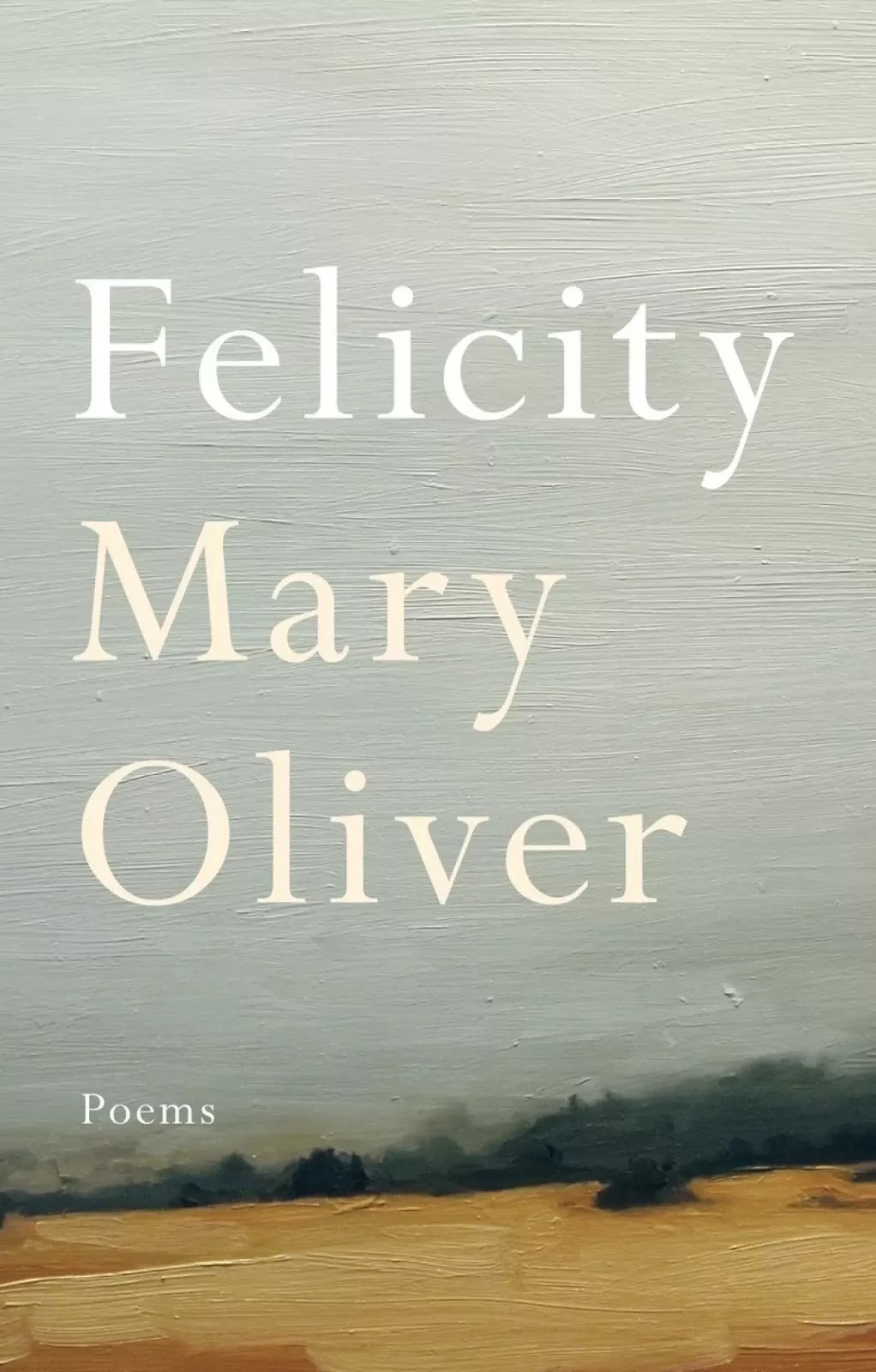
Mary Oliver's Felicity. I love these poems. They are so simple and short but on the third or fourth reading, they suddenly open up and their complexity blasts you in the face.

Joseph Roth's The Hotel Years. I am a huge fan of Roth and I read one or two stories from this each night before I sleep. The little stories, newspaper articles that Roth wrote between the wars as he traveled from one European city to another, predict the calamities that waited for Germany, France, the future Eastern Bloc. But the power in these vignettes reside in the small moments: the angry German youth, the Jewish peddler, the prostitute. They are such humane and beautiful little snapshots of life.

That sounds like a lot but when you figure I can usually only find an hour or so total to read this time of year, it'll take me a while to get through the above books.

Plus I'm on a jury now and I just got a new library of five short-listed books that I have to read by the end of this month. More about that later.

I don't have any kids. How people with kids while working full time ever manage to get any reading done is a miracle.


Wednesday, September 23, 2015

Oyster Book Service shutters but the future of books is looking good

When Oyster first started a few years back, it seemed like a potentially interesting model to get people reading and, more importantly, to bring buzz back to the books and publishing world.

Sadly, it wasn't meant to be. Oyster announced that it was closing up shop. Modeled on Netflix, the aim was to get people to sign up to a subscription service whereby each month a book would be e-delivered to various e-readers so you'd have a certain amount of time to read the book before it would disappear and another would re-appear.

I looked into it. It seemed complicated to arrange and I couldn't deal with it. Another issue is that I read on so many different kinds of devices and platforms that it didn't seem suitable for me (I literary read on my phone, iPad, notebook and, of course, mainly paper books).

Still. It's always a drag when someone trying to create a new idea falls flat.

That said, I think fears that have hovered over the book world for many years now, if not overstated, are starting to feel passe. After all, according to several people in the know that I've talked to, digital book sales account for only around 14% of sales in literary fiction and that number has not increased in a number of years.

So ereaders taking over the book world, those fears, have long been considered overblown. (This is for literary fiction, remember: genre fiction does have a higher rate of e-readers though even then it's not more than half of book sales and, again, doesn't seem to be increasing).

The publishing world still moves along: there are hits and there are misses. There are runaway successes that surprise and there are huge bombs. I'm much more optimistic than I was just a few years ago.

Make no mistake: it's not easy: writers rarely can make money off their art. I dislike the concentration of what gets buzzed about (the same 10 books for weeks at a time). But there's an entire industry of Canadian literature that is thriving with our own literary stars and classics. That's a great thing. Not only that, but we have to remember that artists rarely can make much money off their art: singers, dancers, painters, media artists, often have to take full-time jobs to make their art. Few make it big and very few can afford to quit and just live off what they produce.

E-reading on the beach: not a good idea
Publishers are surviving (some barely, it's true). Book culture seems alive and well. There are hundreds of literary journals, blogs, websites that explore book culture and translated fiction has even managed to eek out a small place at many of these places (and successes like Knausgaard and Ferrante show that there is an appetite for translated hits).

And a new bookstore opening around the corner seems like a positive sign, too (one bookstore doesn't prove anything but they do tell me that things are going very well over there).

All of this to say that Oyster shutting its doors is sad but it's also a sign that book lovers don't want gimmicks or revolutionary models to encourage them to read. They just want good books...and as long as publishers can deliver on that, publishing and book culture will continue to thrive.


Monday, September 14, 2015

Cinema, fiction and Kazuo Ishiguro

I saw Kazuo Ishiguro on stage as part of Festival Letteratura in Mantova on Friday (at least 800 people there by my estimation, possibly more than 1,000) and the subject was Telling Stories: Cinema and Fiction.

The conversation started about memory and what film does well and what it doesn't do well. According to Ishiguro, memory is one thing that film, so far, hasn't managed to crack in a satisfying way. True, characters have flashbacks or memory is used as a plot device (they talked about Hitchcock's Marnie and the final reveal where the entire motivation and secret's she's harboured is exposed with an image), but the act of recreating a memory is one that is difficult, if not impossible, to weave in with the present narrative. If we jump back in time, it becomes a realistic portrait, it's part of the movie, it's no longer really a memory in a certain way.

I want to think about this because it might be argued that fiction, too, has a similar limitation. When one thinks about the work of Ishiguro, memory is key to the characters and their motivations. But the memories can reside quietly in characters on the page, we're not necessarily pulled out of the action of the present to reflect on or remember the memory.

To me what makes this interesting is the question of trauma. How does the memory of trauma operate in fiction vs. cinema? After all, trauma is a flash, an image, not necessarily an entirely constructed narrative. And in cinema, trauma can operate on a more "real" level in a certain way: it has the emotional punch that trauma can have in real life (or some approximate emotional punch). Think Taxi Driver and all the stark shocking images. Or Twelve Monkeys and its frenetic moments of emotion.

After memory, the conversation drifted to what cinema can do well vs. fiction: and according to Ishiguro, one thing that cinema does well is action. He claims, aptly, that we tend to dismiss action in film because we think it's simple and that it lacks complexity (we, being, deep thinkers, I guess). But that action actually can be quite complex and done for a variety of reasons. He cited the Bourne Movies (I, too, am a huge fan of these films) and how the action operates on a defensive level from beginning to end. This as opposed to other movies where the action is offensive. According to Ishiguro, this distinction is key to how we as the audience react to and identify with the characters.

All of this is very interesting for me since I am just as interested in movies as I am in books. And,
A++ defensive action: why we love Bourne
happily, the conversation ended with a statement that I had to consider: the writer ended his talk by asserting that movies and books (cinema and fiction) are linked together creatively in a way now that they never have been before. They are vital to one another. People have been predicting the death of the novel since the beginning of the novel but as an art form it continues to be incredibly important in how stories are told and, more precisely, in how movies are told. After all, a movie can bring an enormous amount of publicity to a novel (too many examples to note here) but movies and movie makers need novels to create new and original stories. Without novels we have merely Hollywood formulas repeated an infinitum (we are almost there already and are well beyond there in Hollywood).

This is a particularly positive way to end a talk about movies in the midst of an important literary festival. Obviously I think a lot about books and the role that books play in public life. It's easy to get pessimistic. It's easy to feel that books are more and more relegated to the margins. Books and literature are niche occupations, no question. When I'm out in the world and talking to people who aren't necessarily readers or thinkers, I'm often shocked at how little they know about contemporary writers. Even huge stars that every reader must know, in the world of non-books, they mean little to nothing. And I forget that this is the majority of the world, of the US, of Canada. Most people don't read.

Tippi Hedren as Marnie: bad at memory
But, that said, books and literature have a wider berth than we give them credit for. They are used in movies. They are read on subways in the mornings and on lunch hours. They are stashed into beach bags on summer holidays. They are tossed into the back seat of cars on the way up to the cabin for the week. But because books and the act of reading doesn't "photograph" well, they aren't represented easily on screen (think about, for example, how rarely people watch TV on TV: it's not a cinematically pleasing thing to watch), they exist on the margins of all that. In the end, reading is a solitary act and one that's hard to discuss or share in the same way the TV is or movies can be. (Not that we can't discuss books but it's so personal and individual what people choose to read.)

I've said it before and I'll say it again: everyone should read. It makes smarter people even smarter. It makes not so smart people more interesting. It helps us see worlds and ideas in a way no other art form can. We can empathize, sympathize, imagine other ways of living, thinking about new ideas. Without exception: every single person who reads regularly that I know is more interesting because of it.

So turn off the Internet and go read a book. Without the phone at the fingertips.

Thursday, September 3, 2015

Canada refuses invitation to be country of honour at prestigious Frankfurt Book Fair

This story has been making the rounds on social media for the past 12 hours and it's a bit shocking.

Apparently, the Canadian government refused the invitation by the largest book fair in the world, citing budget problems. There is generally a cost associated with this honor, but it translates into book deals for authors, publishers, rights agencies, translators and bookstores, and the roughly five to six million dollars it would have cost is minimal.

There's a link to the story here but for some reason, only the Francophone media, Radio-Canada specifically, is reporting on this so far. The link's in French.

Obviously, I don't know all the ins and outs and there could be some other angle or some other information the journalist wasn't privy to, but if this is true, it's really depressing and frustrating. There aren't enough ways to describe how important this kind of honour would have meant for Canada and the Canadian publishing industry in particular. Instead of Canada, the fair then turned their sites on France who them become the country of honour. They ended up spending more than the amount required and are now reaping the benefits.

Canada to Frankfurt: "Naaaaah, we'll pass..."
For the uninitiated, these fairs are terribly important because everyone from the industry is there making deals: publishers meet writers who talk to translators and book chains and libraries and rights agencies and distributors, all with the idea of facilitating book deals all over the world. If your book's been translated and published in Turkish, in Chinese, in French, in Spanish, chances are the deal happened (or the contact was made) in Frankfurt. It's the biggest and most prestigious book fair in the world (by far) and attracts 275,000 visitors and 9,000 journalists.

So the thought that the Canadian government said no for a measly $6,000,000 is appalling, especially when one considers the fact that after years of essentially being one of the main drivers in creating an identity for Canadian literature inside Canada, the Canada Council for the Arts (funded by the Federal government) has for a couple of years started spending (a small amount of) money trying to promote Canadian literature outside Canada, to put Canada on the map internationally in terms of our artists, writers, musicians, dancers, etc.

I'm sure Canada Council had little to no involvement in the above decision since they have a specific mandate and the Frankfurt Book Fair would have fallen outside it, but it just goes to show how one branch of government can often be undoing what the other hand is trying to accomplish.

Thursday, August 20, 2015

David Byrne's library, More readers reading on phones, what vacations say about us, Neil Gaiman's 17 best, Ecuador's politics, Murakami's workspace: Cultural Digest for August 20

This is not my beautiful library. And these are not my beautiful books.

Friday, January 9, 2015

Just read

On the news that Mark Zuckerberg is aiming to read at least 26 books in 2015, I've been thinking about what we need to do to get people to read more. In the book world, we often hear that young people never read anymore because they're too busy taking selfies and sexting but I don't think this is true. At least not wholly true.

Reading has always been a niche activity (reading fiction at least) but one thing I would say about younger people is that they tend to read more of the same writers. What I mean is that people under, say, 30-35, grew up in a world where celebrity culture was the norm so these readers are often drawn to celebrity writers (by this I don't necessarily mean celebrities who happen to write but writers who are famous for being writers). I'm often surprised when a young person recommends a writer or book to me how much uniformity there is in the names they suggest. In one way this is normal: people of a particular generation are likely to be drawn to writers that speak to their hangups, interests, fears, insecurities, senses of humour, etc. But the down side to this is that there seems to be less room for idiosyncratic reading among younger people.

When I was in my early twenties (I'm in my early 40s now), we passed around books which were quirky (Tom Robbins, Hanif Kureishi) or spoke to specific sub-groups (Edmund White, Rita Mae Brown) or writers that came from our area (Tom Spanbauer, Jack London) or which spoke to our specific sensibilities (Milan Kundera, Barbara Kingsolver). It wasn't the same 10 writers being talked about at the same time (which is the way it is now).

Though I'm not too optimistic that Zuckerberg will choose "good" books, his reading pledge is important in that it makes reading into something people should WANT to do. We have to have leaders and innovators stress the importance of reading. We have to create the social message that reading makes one a more interesting, complex person. We have to broaden the appeal of books so that young people realize that reading can be a highly individualized activity that doesn't have to adhere to the"trends" in the same way everything else does.

I often hear from people I know: "Oh, I'm just too busy to read," but I never believe this. Everyone is
too busy. Or most everyone. Reading has to be made into something of a priority:  on the Metro I always want to scream when I see 25 people in my Metro car reading the daily subway rag which is almost full of stories we've already read online the day before and, when not those pieces, full of vapid & banal advice columns.Or when I see people playing mindless video games.

(It's unfair of me to be so judgmental, I realize: I sometimes just want to tune out the world when coming home from work, especially this time of year after a long day. Sometimes I just can't read anymore after reading all day long, I also have a mindless video game on my phone.)

The thing is, we can't do everything: we can't see every TV show and read every news story and play all the games everyone is talking about, plus keep up with FB and Twitter and Instagram. We have to make choices about what's important. And reading always adds more to my life than giving in to all the chatter that we're constantly bombarded with. But, yes, I give in and deal with the chatter: I have all the accounts that everyone else has. I waste time on FB and other time sucks despite myself.

But I read a lot. For me it's realizing that reading doesn't have to be something I do when I have a free hour and can sit in peace in my favorite chair. Rare is it the person who can read that way anymore. Instead I keep a book with me at all times: I read on the subway, I read standing in line at the supermarket, I read on my lunch hour, I read while I let the dog play in the park (though not at this time of year). I read in the bath. I give myself one hour on the weekends to read in a cafe near my house. I read paper books, I read on my phone, I read via Audible (listen), I read on my iPad (not that often, though). I read at night in bed. (Though usually that's my TV time.) And, no, I don't spend all my free time reading. It's just one thing I do regularly because I make it a priority.

By making reading something to aspire to, people will make it an effort. I'm a big believer that people who read (novels, magazines, history, non-fiction, even CRAP books!) are more interesting, easier to talk to, and more intelligent.

Tuesday, September 24, 2013

Water Cooler Conversations: TV. Not books. Not movies

At a few social events recently, I've been struck by how rarely movies or books figure into our social conversations. I was chatting with a couple of people about Woody Allen's new movie, Blue Jasmine (I liked it though it definitely has some problems. I think it's his best movie since Vicky Christina Barcelona and the story is rather complex for a Woody Allen film), but discussing a movie in such a setting was unusual. It was just three of us in a corner, chatting about the movie, how we felt about it, what was new or unusual about it. This was in a room full of maybe 25 people. A few people indicated that they'd seen it but had little to offer to the discussion beyond "yes," or "no."

Pick up a book once in a while...
But then someone brought up Breaking Bad and Justified and the conversation just took off, several people then joined in, all had something to say. And people were passionate: arguing, getting sharp and even shrill. Even if people hadn't seen Breaking Bad, they all had read and heard enough about it that they could at least understand what the conversation was about and could even contribute a bit. Mad Men, Girls, The Walking Dead, Orange is the New Black, Dexter: all of these shows were discussed with varying degrees of enthusiasm and criticism.

Afterwards, I thought about how rare it is that books figure into these conversations. Why is that? Are there just too many books so it's rare to find people who read the same books as you do? If I were at a party where most people had read something very popular (like Twilight or 50 Shades), would a conversation develop around these books? Or do they lack the complexity necessary to make an interesting conversation? (Or perhaps people would be embarrassed to admit that they'd read them?) It seems to me that books are better suited for a conversation between two people or in a forced setting (like a book club).

It's depressing, actually, because since I read all the time, I rarely have the chance to talk about a specific work I am reading or have recently read. I will occasionally have the chance to talk with someone about a writer whose work I admire, but it rarely gets very in-depth. And I'd say that my social circle reads more than the average person does (since I work in the book world but also since so many of my friends are writers, artists or those who work in the arts). The rare exception is when I lend a book to someone I know and we discuss it when they give it back (and this frequently centers around graphic novels, for some reason, since typically people won't take 2 months to read a graphic novel).

Movies, too, operate in this way like books do: if someone is interested in indie or foreign movies, there are so many that it's not likely we will run into someone who has recently seen a movie we have. And if one is into huge blockbusters that many people see, there is little in it to discuss since these movies are so rarely complex.

So that leaves TV. I don't mind this wave of TV that has been sweeping through North America the last 10 years or so. Certain TV shows have become the new water cooler topics since it's "good" popular culture. Still, being a book lover and promoter, I wish that element were present, too...


Monday, August 19, 2013

Back in full swing...

After semi-working at home (reading, writing, catching up on all the little niggly things we can never get to during the year), we are back in our offices full time now, airing out dusty corners, going through the piles of books, galleys, catalogues and magazines that have piled up, and getting kind of excited about what we have on our docket for 2014! Yes, it might seem like an eternity away but before you know it, winter will be here, then spring and our 2014 edition.

Can't say what we have going on yet, but I can say that our 2014 Festival dates are April 29 - May 4, 2014 and will be held at Hotel 10, 10 Sherbrooke Street West, just as we've done the past few years.

One of the first things on my task-list (just finished going through my hundreds of emails, organizing, deleting, replying, puzzling) is to tackle the piles and piles of books we have all over our offices and in my office in particular. That means filing some, tossing some, lending many, and giving some away as promotion! Stay tuned for that!

It's a big messy job keeping track of all these books, but, naturally, we wouldn't have it any other way...


Thursday, March 7, 2013

Serious Readers according to Philip Roth

Someone told me something the other day which has been playing around in my mind ever since: he said that Philip Roth had lamented that in another generation there won't be any "readers" left. 

My initial reaction was to roll my eyes and chalk this up to typical Cassandra's involved in the writing or publishing industries. Of course, people are reading more now than ever before. More books are sold than ever before (despite what we're led to believe and, yes, most of the books are crap) and, of course, most people are sitting in front of a computer reading almost all day long.

Seriously? 2 1/2 hours every day?
So the question is: what is a "reader." According to Philip Roth, it's those who are "serious readers," meaning they read books at least 2 or 2 1/2 hours a day. Again, my initial reaction is skepticism. After all, reading is my job and even I often don't read that much, at least not books.

I wonder WHO today could possibly read books 2 hours every day? I typically get up at 6:30, work for two hours every morning (online reading, not book reading though I'm often reading about books), then I go into my office at around 9:30, staying until 5:30 or 6:00. By the time I get home, it's close to 7:00. Then there's dinner, catching up with what happened today with those around me, and if I'm lucky, an hour or 45 minutes of reading books. But I also try to read an article or two in The New Yorker or some other literary magazine. A TV episode of something before sleep...then, because I get up so early, I am off to bed.  And those are nights when I don't have some event to attend or some work to finish.

If Marilyn could do it...
Where on earth would I squeeze in 2 or more hours reading? I imagine that most people's schedules are similar to mine except maybe the few writers I know who can make a living at from writing alone.

On the weekends, I might occasionally find a couple of hours to sit and read but honestly even that's not every weekend. Again, books are my job and if I can't find the time to do it, I wonder if anyone can (except the writer exceptions noted above).

On some level it's a choice: I could possibly squeeze in 2 hours if I did nothing else: no movies, no TV, no conversations or going out. But reading should just be a part of one's life, it should add to life but not be life. I want to be able to go out and know what people are talking about. And, let's face it, though I occasionally have chats about some books with my friends (many of whom are readers), we talk at least as much about other things in life if not more. 

Reading has become, I think, a private occupation, something one does but possibly doesn't necessarily share or discuss with others (often perhaps because there aren't that many readers out there?), or at least not much.

So what do we talk about with others now? The news, TV shows (The Walking Dead, Enlightened, etc.), the latest New Yorker, podcasts, popular Internet memes, etc. 

I wouldn't want to sacrifice that for books. I love reading, but I guess even Philip Roth would say I'm not a "serious reader" ...