I think it's too late to see it in theatres, but maybe it'll be available on DVD soon, this film really blew me away. I saw it a few nights ago at Cinema du Parc and I do have to admit, that I have a particular fondness for Brazil films. I don't know why exactly since I've never been to Brazil nor do I speak Portuguese (I also like Brazilian writers), but I suppose it has to do with the vast differences between a country like Brazil and Canada (the heat, the chaos of it, the warmth of the people).
This film tells the story of a wealthy family and their maid, Val, in Sao Paolo and what happens when the maid's daughter, Jessica, comes from the north to stay with her mother before she takes the entrance exams at university.
The contrasts of class are stark and it takes the daughter's presence to make them apparent: her mother is outraged that Jessica refuses to know her place as the maid's daughter, in this kind of class limbo-land, asking to sleep in the guest room, letting the teenagers drag her into the pool. The wealthy wife, too, recognizes the class distinctions and wants to maintain them but she also sees the fact that her husband is very attracted to Val's young beautiful and very intelligent daughter. A complicated arrangement results and is even further complicated by the relationship between Jessica and the teenaged son of the family.
The film exposes the lie that domestic servants are "part of the family" as they aren't, really, and it takes someone shaking up the strict protocol that is so present in this kind of relationship for everyone to feel ruffled, uncomfortable, out of sorts. Oddly, it's the men in the family who don't seem to be so affected by the class rifts, but there's also sexual attraction there to circumvent those distinctions. Sex trumps all.
It's a really lovely film, full of sensuality and pain, but also hopeful, ending in the way we all hope it ends. I somehow managed to miss the entire Montreal Brazil Film Festival this year (where was I?!) which is unfortunate because last year I saw an incredible Brazilian film there (based on a Stefan Zweig short story). Here's to hoping that Cinema du Parc will continue to show Brazilian films.
On a related note, very sad to see that Cinema Excentris has closed. Apparently it's a temporary closure but we need more repertory cinemas in this city. There's no shortage of film festivals but it's so important to have cinemas that are devoted to less huge films, and more art-house or foreign films. It's sad to see how the film world has become so concentrated on huge blockbusters and there is so little room left for other kinds of film.
But that's a topic for another day.
Showing posts with label movies. Show all posts
Friday, November 27, 2015
Que Horas ela volta? / The Second Mother by Anna Muylaert
Labels:
Brazil,
Brazilian cinema,
cinema,
film,
movies
Monday, September 14, 2015
Cinema, fiction and Kazuo Ishiguro
I saw Kazuo Ishiguro on stage as part of Festival Letteratura in Mantova on Friday (at least 800 people there by my estimation, possibly more than 1,000) and the subject was Telling Stories: Cinema and Fiction.
The conversation started about memory and what film does well and what it doesn't do well. According to Ishiguro, memory is one thing that film, so far, hasn't managed to crack in a satisfying way. True, characters have flashbacks or memory is used as a plot device (they talked about Hitchcock's Marnie and the final reveal where the entire motivation and secret's she's harboured is exposed with an image), but the act of recreating a memory is one that is difficult, if not impossible, to weave in with the present narrative. If we jump back in time, it becomes a realistic portrait, it's part of the movie, it's no longer really a memory in a certain way.
I want to think about this because it might be argued that fiction, too, has a similar limitation. When one thinks about the work of Ishiguro, memory is key to the characters and their motivations. But the memories can reside quietly in characters on the page, we're not necessarily pulled out of the action of the present to reflect on or remember the memory.
To me what makes this interesting is the question of trauma. How does the memory of trauma operate in fiction vs. cinema? After all, trauma is a flash, an image, not necessarily an entirely constructed narrative. And in cinema, trauma can operate on a more "real" level in a certain way: it has the emotional punch that trauma can have in real life (or some approximate emotional punch). Think Taxi Driver and all the stark shocking images. Or Twelve Monkeys and its frenetic moments of emotion.
After memory, the conversation drifted to what cinema can do well vs. fiction: and according to Ishiguro, one thing that cinema does well is action. He claims, aptly, that we tend to dismiss action in film because we think it's simple and that it lacks complexity (we, being, deep thinkers, I guess). But that action actually can be quite complex and done for a variety of reasons. He cited the Bourne Movies (I, too, am a huge fan of these films) and how the action operates on a defensive level from beginning to end. This as opposed to other movies where the action is offensive. According to Ishiguro, this distinction is key to how we as the audience react to and identify with the characters.
All of this is very interesting for me since I am just as interested in movies as I am in books. And,
happily, the conversation ended with a statement that I had to consider: the writer ended his talk by asserting that movies and books (cinema and fiction) are linked together creatively in a way now that they never have been before. They are vital to one another. People have been predicting the death of the novel since the beginning of the novel but as an art form it continues to be incredibly important in how stories are told and, more precisely, in how movies are told. After all, a movie can bring an enormous amount of publicity to a novel (too many examples to note here) but movies and movie makers need novels to create new and original stories. Without novels we have merely Hollywood formulas repeated an infinitum (we are almost there already and are well beyond there in Hollywood).
This is a particularly positive way to end a talk about movies in the midst of an important literary festival. Obviously I think a lot about books and the role that books play in public life. It's easy to get pessimistic. It's easy to feel that books are more and more relegated to the margins. Books and literature are niche occupations, no question. When I'm out in the world and talking to people who aren't necessarily readers or thinkers, I'm often shocked at how little they know about contemporary writers. Even huge stars that every reader must know, in the world of non-books, they mean little to nothing. And I forget that this is the majority of the world, of the US, of Canada. Most people don't read.
But, that said, books and literature have a wider berth than we give them credit for. They are used in movies. They are read on subways in the mornings and on lunch hours. They are stashed into beach bags on summer holidays. They are tossed into the back seat of cars on the way up to the cabin for the week. But because books and the act of reading doesn't "photograph" well, they aren't represented easily on screen (think about, for example, how rarely people watch TV on TV: it's not a cinematically pleasing thing to watch), they exist on the margins of all that. In the end, reading is a solitary act and one that's hard to discuss or share in the same way the TV is or movies can be. (Not that we can't discuss books but it's so personal and individual what people choose to read.)
I've said it before and I'll say it again: everyone should read. It makes smarter people even smarter. It makes not so smart people more interesting. It helps us see worlds and ideas in a way no other art form can. We can empathize, sympathize, imagine other ways of living, thinking about new ideas. Without exception: every single person who reads regularly that I know is more interesting because of it.
So turn off the Internet and go read a book. Without the phone at the fingertips.
The conversation started about memory and what film does well and what it doesn't do well. According to Ishiguro, memory is one thing that film, so far, hasn't managed to crack in a satisfying way. True, characters have flashbacks or memory is used as a plot device (they talked about Hitchcock's Marnie and the final reveal where the entire motivation and secret's she's harboured is exposed with an image), but the act of recreating a memory is one that is difficult, if not impossible, to weave in with the present narrative. If we jump back in time, it becomes a realistic portrait, it's part of the movie, it's no longer really a memory in a certain way.
I want to think about this because it might be argued that fiction, too, has a similar limitation. When one thinks about the work of Ishiguro, memory is key to the characters and their motivations. But the memories can reside quietly in characters on the page, we're not necessarily pulled out of the action of the present to reflect on or remember the memory.
To me what makes this interesting is the question of trauma. How does the memory of trauma operate in fiction vs. cinema? After all, trauma is a flash, an image, not necessarily an entirely constructed narrative. And in cinema, trauma can operate on a more "real" level in a certain way: it has the emotional punch that trauma can have in real life (or some approximate emotional punch). Think Taxi Driver and all the stark shocking images. Or Twelve Monkeys and its frenetic moments of emotion.
After memory, the conversation drifted to what cinema can do well vs. fiction: and according to Ishiguro, one thing that cinema does well is action. He claims, aptly, that we tend to dismiss action in film because we think it's simple and that it lacks complexity (we, being, deep thinkers, I guess). But that action actually can be quite complex and done for a variety of reasons. He cited the Bourne Movies (I, too, am a huge fan of these films) and how the action operates on a defensive level from beginning to end. This as opposed to other movies where the action is offensive. According to Ishiguro, this distinction is key to how we as the audience react to and identify with the characters.
All of this is very interesting for me since I am just as interested in movies as I am in books. And,
![]() |
| A++ defensive action: why we love Bourne |
This is a particularly positive way to end a talk about movies in the midst of an important literary festival. Obviously I think a lot about books and the role that books play in public life. It's easy to get pessimistic. It's easy to feel that books are more and more relegated to the margins. Books and literature are niche occupations, no question. When I'm out in the world and talking to people who aren't necessarily readers or thinkers, I'm often shocked at how little they know about contemporary writers. Even huge stars that every reader must know, in the world of non-books, they mean little to nothing. And I forget that this is the majority of the world, of the US, of Canada. Most people don't read.
![]() |
| Tippi Hedren as Marnie: bad at memory |
I've said it before and I'll say it again: everyone should read. It makes smarter people even smarter. It makes not so smart people more interesting. It helps us see worlds and ideas in a way no other art form can. We can empathize, sympathize, imagine other ways of living, thinking about new ideas. Without exception: every single person who reads regularly that I know is more interesting because of it.
So turn off the Internet and go read a book. Without the phone at the fingertips.
Labels:
books,
cinema,
Festival Letteratura,
ideas,
Kazuo Ishiguro,
movies,
reading
Monday, August 10, 2015
The Tribe
Now showing at Cinema du Parc, The Tribe is a 2014 Ukrainian film, written and directed by Myroslav Slaboshpytskiy. The film is set in a boarding school for deaf kids but a very violent and nearly adult-less school where a small time gang runs all kinds of scams or crimes, from pickpocketing to prostitution to mugging pensioners to running visa scams.
The intriguing thing about the movie is that there is no dialogue: the entire film is done in sign-language but that takes surprisingly little time to get adjusted to as an audience member. Yes, we miss details, but the story arc is clear and easy to follow. Filmed with entirely deaf actors, the complexity of the film shoot must have been overwhelming (see a really interesting Vice interview here with one of the stars of the film).
What a bleak, depressing and dog-eat-dog world. I've been thinking a lot about the notion of power, particularly in how we (as in The West) deal with Russia, and this notion of power, physical power, being the end all beat all of respectability is one that isn't prominent in our law-based society. This thought came about because of an article I read a while back about what we don't understand about dealing with Putin, that power and how he holds on to power, is of deadly importance to him and explains all this visual imagery that is so key for him to maintain this reputation for being a strong man. Obviously, the way we think about power is complex. But it seems to me that we approach power in a more subtle way in North America: power comes not just from brute strength but also from smarts, street smarts, intelligence and being one step ahead of one's enemy. But here power is open-faced, bloody, raw. There is no question that he who has the power is the one at the top and there is no room for things like diplomacy, intellectualism, or even just outmaneuvering one's enemy.
This is an almost operatic kind of tale, love, pain, betrayal, and murder. And there is no spoken dialogue. Quite an unusual cinematic experience on the whole. The critical reviews have been very solid, people comparing it to The Godfather and reacting to the fact that there are these long takes with very little cutting.
I have to say that this film is one that stays with you; I'm already replaying certain scenes in my mind, trying to work them out, wondering what the director was trying to do and, more importantly, how he did it.
Definitely worth seeing (I was surprised that there were so many people there) but don't see it if you're on the verge of feeling depressed or bleak. It's a dark and angry film though it's fascinating.
The Tribe plays this week and next at Cinema du Parc.
The intriguing thing about the movie is that there is no dialogue: the entire film is done in sign-language but that takes surprisingly little time to get adjusted to as an audience member. Yes, we miss details, but the story arc is clear and easy to follow. Filmed with entirely deaf actors, the complexity of the film shoot must have been overwhelming (see a really interesting Vice interview here with one of the stars of the film).What a bleak, depressing and dog-eat-dog world. I've been thinking a lot about the notion of power, particularly in how we (as in The West) deal with Russia, and this notion of power, physical power, being the end all beat all of respectability is one that isn't prominent in our law-based society. This thought came about because of an article I read a while back about what we don't understand about dealing with Putin, that power and how he holds on to power, is of deadly importance to him and explains all this visual imagery that is so key for him to maintain this reputation for being a strong man. Obviously, the way we think about power is complex. But it seems to me that we approach power in a more subtle way in North America: power comes not just from brute strength but also from smarts, street smarts, intelligence and being one step ahead of one's enemy. But here power is open-faced, bloody, raw. There is no question that he who has the power is the one at the top and there is no room for things like diplomacy, intellectualism, or even just outmaneuvering one's enemy.
This is an almost operatic kind of tale, love, pain, betrayal, and murder. And there is no spoken dialogue. Quite an unusual cinematic experience on the whole. The critical reviews have been very solid, people comparing it to The Godfather and reacting to the fact that there are these long takes with very little cutting.
I have to say that this film is one that stays with you; I'm already replaying certain scenes in my mind, trying to work them out, wondering what the director was trying to do and, more importantly, how he did it.
Definitely worth seeing (I was surprised that there were so many people there) but don't see it if you're on the verge of feeling depressed or bleak. It's a dark and angry film though it's fascinating.
The Tribe plays this week and next at Cinema du Parc.
Labels:
cinema,
Cinema du Parc,
deaf,
film,
movies,
Ukraine,
Vice,
Vice Magazine
Tuesday, December 2, 2014
Leon Trotsky by Joshua Rubenstein
Trotsky is a figure who fascinates and has for a long time. There are movies about him (including one that alludes to him consistently since Jay Baruchel's character believes he is Trotsky reincarnated). And many many books. I was in a bookshop the other day and this biography of Trotsky called out to me so since I was in between books, I nicked it off the shelf and started reading it on the metro that afternoon.
As biographies go, it's OK. It's hard work as a biographer, particularly of someone like Trotsky, when so much of his life and career were wrapped up in causes that today seem obscure and rather pointless. I'm not saying they were pointless, but that they seem pointless in their minutiae: how many details, for example, do we need about all these long ago dead parties that wanted to change the world, parties that even at the time the vast majority of people didn't even know or care much about.
(One thing occurred to me as I read this, though: we often hear about this segmented society we live in today where we all get our news or read the feeds from points of view that we largely agree with. So conservatives watch Fox or Sun news and liberals watch MSNB or read Bill Moyers Twitter feed, etc. so we only hear opinions that reflect a point of view we already accept. And that this is a bad thing. But back when newspapers were king, particularly in the early part of the 20th century, newspapers often had very myopic views and biases and they fed into these large social movements. So there were left-wing radical workers newspapers and traditional papers that maintained the status quo and what paper you read determined your political outlook and makeup, etc. (or vice versa which was probably more likely the case).
This occurred to me reading this biography of Trotsky because he wrote a lot and if Trotsky is remembered today for one thing, it's the fact that he was a real writer, not just an agitator or political upstart who wrote on the side. And the papers and journals and reviews he wrote for all had very specific political leanings and points of view: even literary journals championed certain writers who championed certain causes. None of these were "mainstream" (at least not in the way we understand that term today) but there were countless ways to get news from all levels of society.
When we hear about the death of journalism or how journalism has changed so much that it's hardly recognizable, we forget that journalism, really, is a very new kind of art and even 70 years ago was radically different than it is today (or, indeed, than it was in the 70s which is often considered the "height" of journalism). Ideas of free speech are radically new but the powerful influencing how the message is distributed and/or shaped are not new at all.
Who knows how journalism will continue to change and evolve as society (and technology) changes and evolves.)
Back to Trotsky: he was a champion of causes that many would find admirable today: he really did
seem to want to fight for the rights of the poor, the downtrodden, those without any rights. At least early in his career. (Later, things became more complicated).
But to me, the most fascinating part of Trosky's life is his final years in Mexico City before an assassin cut him down. It's an amazing story that, again, has been told and retold so often that fact is not longer that distinct from myth. But despite this being an adequate biography, fiction often seems a more interesting way into a larger than life figure's life story. I'm thinking about (Blue Met 2012 author) Leonardo Padura's book The Man Who Loved Dogs which chronicles the final years of Trotsky's life in Mexico (as be befriends artists like Frida Kahlo and Diego Rivera) and other political revolutionaries. It's an excellent novel and I think I'd re-read that before I read another dry biography about his life.
As biographies go, it's OK. It's hard work as a biographer, particularly of someone like Trotsky, when so much of his life and career were wrapped up in causes that today seem obscure and rather pointless. I'm not saying they were pointless, but that they seem pointless in their minutiae: how many details, for example, do we need about all these long ago dead parties that wanted to change the world, parties that even at the time the vast majority of people didn't even know or care much about.
(One thing occurred to me as I read this, though: we often hear about this segmented society we live in today where we all get our news or read the feeds from points of view that we largely agree with. So conservatives watch Fox or Sun news and liberals watch MSNB or read Bill Moyers Twitter feed, etc. so we only hear opinions that reflect a point of view we already accept. And that this is a bad thing. But back when newspapers were king, particularly in the early part of the 20th century, newspapers often had very myopic views and biases and they fed into these large social movements. So there were left-wing radical workers newspapers and traditional papers that maintained the status quo and what paper you read determined your political outlook and makeup, etc. (or vice versa which was probably more likely the case).
This occurred to me reading this biography of Trotsky because he wrote a lot and if Trotsky is remembered today for one thing, it's the fact that he was a real writer, not just an agitator or political upstart who wrote on the side. And the papers and journals and reviews he wrote for all had very specific political leanings and points of view: even literary journals championed certain writers who championed certain causes. None of these were "mainstream" (at least not in the way we understand that term today) but there were countless ways to get news from all levels of society.
When we hear about the death of journalism or how journalism has changed so much that it's hardly recognizable, we forget that journalism, really, is a very new kind of art and even 70 years ago was radically different than it is today (or, indeed, than it was in the 70s which is often considered the "height" of journalism). Ideas of free speech are radically new but the powerful influencing how the message is distributed and/or shaped are not new at all.
Who knows how journalism will continue to change and evolve as society (and technology) changes and evolves.)
Back to Trotsky: he was a champion of causes that many would find admirable today: he really did
seem to want to fight for the rights of the poor, the downtrodden, those without any rights. At least early in his career. (Later, things became more complicated).But to me, the most fascinating part of Trosky's life is his final years in Mexico City before an assassin cut him down. It's an amazing story that, again, has been told and retold so often that fact is not longer that distinct from myth. But despite this being an adequate biography, fiction often seems a more interesting way into a larger than life figure's life story. I'm thinking about (Blue Met 2012 author) Leonardo Padura's book The Man Who Loved Dogs which chronicles the final years of Trotsky's life in Mexico (as be befriends artists like Frida Kahlo and Diego Rivera) and other political revolutionaries. It's an excellent novel and I think I'd re-read that before I read another dry biography about his life.
Labels:
biography,
cinema,
Communism,
Cuba,
Jay Baruchel,
Jewish lives,
Joshua Rubenstein,
Leon Trotsky,
Leonardo Padura,
Mexico,
movies,
novels,
Russia,
Trotsky,
USSR
Friday, November 28, 2014
Lilting
As part of Image+Nation, I saw Lilting last night, an excellent little movie starring Ben Whishaw. I can't remember how, but I saw a trailer of this film a while back and had my eyes out, waiting for the chance to see it in Montreal and I was really happy when I saw it on Image+Nation's lineup for this year.

I used to go to Image+Nation frequently and see many films but it's been a while because November and December are loaded with busy days and events several nights a week. But since the film was only playing once, I blocked off the entire evening, had dinner with a good friend (even so, I escaped from our offices in a cloud of chaos and unfinished work). It's probably been three years since I saw anything at the Imperial, that lovely old theatre downtown, and the evening didn't disappoint.
"Lilting," directed by British director Hong Khaou, is set in contemporary London and tells the story of an unlikely bond between a Chinese woman in her 60s and her son's boyfriend. Her son, Kai, has died, though we don't find out until almost the film ends how he died, and there was so much opportunity for schlock or melodrama, but Khaou keeps the emotion very tightly wound throughout much of the film. We laugh, we feel irritation, we feel nervous, but we don't yet feel loss or the pain that the characters are experiencing until the end of the movie when it comes at us all at once in the final denouement.
The film starts with Richard, Kai's boyfriend, hiring a young translator to serve a "go between" for Kai's mother (who doesn't speak English) and a British man she has been seeing, Alan. They both live in an old folks' home and it is here and in these scenes that the film gets its humour: there are such huge culture clashes between the elderly English man and the older Chinese woman, everything filtered through the young Chinese translator. Richard lurks there in these scenes, both trying to be inconspicuous but also trying to get information, to connect to Kai's mother, ostensibly so that he can help her (which is probably partly true) but also so that he can simply connect to this last remaining individual from his lost Kai's life. He wants to experience the loss together in an odd way and this human need, to share loss, is where the film's humanity becomes so vital.
The scenes with Kai are all flashbacks and the dialogue between them is limited, we get very little sense of Kai, actually, and the film is really about this clash of cultures, of generations, and of two people dealing with their loss in very different ways.
It's a really lovely movie. There are a few long (for a movie) soliloquoys by the characters that are complex and beautiful. Like this one, said by Kai's mother at the end of the movie, speaking about her loss:
Through plenty of crying, I've learnt to be content that I won't always be happy, secure in my loneliness, hopeful that I will be able to cope. Every year on Christmas Day I get very lonely. An incredible feeling of solitude. On this day, everything has stood still, even the trees have stopped rustling, but I'm still moving, I want to move, but I have nothing to move it, and nowhere to go. The
scars beneath my skin suddenly surface and I get scared. Scared of being alone.
This poetic moment is filmed so beautifully and what I appreciate about this kind of approach is that the writer/director uses language in such a real way: it's not beauty just for the sake of beauty. We learn about this character, about her hidden passions and all the things we don't have access to because she is different or because she can't speak English.
I found this film to be incredibly moving and complex, meditative in language and image.
There is a lot to see at Image+Nation and I especially love their Latin American focus this year.

I used to go to Image+Nation frequently and see many films but it's been a while because November and December are loaded with busy days and events several nights a week. But since the film was only playing once, I blocked off the entire evening, had dinner with a good friend (even so, I escaped from our offices in a cloud of chaos and unfinished work). It's probably been three years since I saw anything at the Imperial, that lovely old theatre downtown, and the evening didn't disappoint.
"Lilting," directed by British director Hong Khaou, is set in contemporary London and tells the story of an unlikely bond between a Chinese woman in her 60s and her son's boyfriend. Her son, Kai, has died, though we don't find out until almost the film ends how he died, and there was so much opportunity for schlock or melodrama, but Khaou keeps the emotion very tightly wound throughout much of the film. We laugh, we feel irritation, we feel nervous, but we don't yet feel loss or the pain that the characters are experiencing until the end of the movie when it comes at us all at once in the final denouement.
The film starts with Richard, Kai's boyfriend, hiring a young translator to serve a "go between" for Kai's mother (who doesn't speak English) and a British man she has been seeing, Alan. They both live in an old folks' home and it is here and in these scenes that the film gets its humour: there are such huge culture clashes between the elderly English man and the older Chinese woman, everything filtered through the young Chinese translator. Richard lurks there in these scenes, both trying to be inconspicuous but also trying to get information, to connect to Kai's mother, ostensibly so that he can help her (which is probably partly true) but also so that he can simply connect to this last remaining individual from his lost Kai's life. He wants to experience the loss together in an odd way and this human need, to share loss, is where the film's humanity becomes so vital.
The scenes with Kai are all flashbacks and the dialogue between them is limited, we get very little sense of Kai, actually, and the film is really about this clash of cultures, of generations, and of two people dealing with their loss in very different ways.
It's a really lovely movie. There are a few long (for a movie) soliloquoys by the characters that are complex and beautiful. Like this one, said by Kai's mother at the end of the movie, speaking about her loss:
Through plenty of crying, I've learnt to be content that I won't always be happy, secure in my loneliness, hopeful that I will be able to cope. Every year on Christmas Day I get very lonely. An incredible feeling of solitude. On this day, everything has stood still, even the trees have stopped rustling, but I'm still moving, I want to move, but I have nothing to move it, and nowhere to go. The
scars beneath my skin suddenly surface and I get scared. Scared of being alone.
This poetic moment is filmed so beautifully and what I appreciate about this kind of approach is that the writer/director uses language in such a real way: it's not beauty just for the sake of beauty. We learn about this character, about her hidden passions and all the things we don't have access to because she is different or because she can't speak English.
I found this film to be incredibly moving and complex, meditative in language and image.
There is a lot to see at Image+Nation and I especially love their Latin American focus this year.
Labels:
British cinema,
cinema,
Film Festivals,
film Image+Nation,
movies
Thursday, July 10, 2014
Borgman
The movie Borgman by Dutch director Alex van Warmerdam is quite a ride. A bizarre movie. You know, that kind of movie you are sitting in and you are so perplexed and excited by what's happening that afterwards you need to just sit down on a park bench and process what you just saw.
The film starts with an almost throwaway epigraph: "And they descended upon the Earth to strengthen their ranks" and the camera pans a spring countryside that has not yet come to life. Swarthy-looking men are gathering, getting weapons (one is a priest) and deliberately moving towards something violent. But we are left in the dark, never sure where our footing is. Nor is this conflict ever really explained or detailed.
Men are hiding in the Earth underground and when they hear the other men with guns and swords approaching, they escape. Barely. This is not a mystical or CGI kind of experience. It's quite literal and very engaging: men running through thickets of trees, terrified of getting caught.
Then later, one of these men (looking like a homeless guy) shows up at the door of a wealthy Dutch family and asks if he can take a bath. When he is turned away, violence erupts but now it's too late: the sympathetic wife secrets him into the back guesthouse after the husband has left for work. Is this homeless-looking man up to something nefarious? Clearly he is but it's never made clear. Later his friends join him in the seduction of this family and the movie continues along almost like a parable, an allegory though there is no nice framework to set alongside the movie that makes the parable-like allusions clear.
I kept asking: "What is happening?" from beginning to end. It's not that it didn't make sense logically but there is no sense of movie-logic here: things move along as if pre-destined and the actions of the characters are not mandated by free will. Other odd allusions: X's mysteriously tattooed on backs; scars on characters' bodies; surgeries being done on children which are never explained. Issues of class play in the background but nothing is ever determined nor is there a "message" to take away. Is it a treatise on destiny or fate? Are we supposed to feel nihilistic at the way our class determines our futures so that we have very little free will in shaping our own futures? Or is this reading too much into it?
It's a very interesting film and one I want to see again if only to get closer to some kind of resolution. Make more mistake: one doesn't leave this film understanding anything more than when one first arrives at it. But in terms of how movies operate, it's worth seeing and the acting is stellar.
Borgman is playing at Cinema du Parc all this week and next.
The film starts with an almost throwaway epigraph: "And they descended upon the Earth to strengthen their ranks" and the camera pans a spring countryside that has not yet come to life. Swarthy-looking men are gathering, getting weapons (one is a priest) and deliberately moving towards something violent. But we are left in the dark, never sure where our footing is. Nor is this conflict ever really explained or detailed.
Men are hiding in the Earth underground and when they hear the other men with guns and swords approaching, they escape. Barely. This is not a mystical or CGI kind of experience. It's quite literal and very engaging: men running through thickets of trees, terrified of getting caught.
Then later, one of these men (looking like a homeless guy) shows up at the door of a wealthy Dutch family and asks if he can take a bath. When he is turned away, violence erupts but now it's too late: the sympathetic wife secrets him into the back guesthouse after the husband has left for work. Is this homeless-looking man up to something nefarious? Clearly he is but it's never made clear. Later his friends join him in the seduction of this family and the movie continues along almost like a parable, an allegory though there is no nice framework to set alongside the movie that makes the parable-like allusions clear.
I kept asking: "What is happening?" from beginning to end. It's not that it didn't make sense logically but there is no sense of movie-logic here: things move along as if pre-destined and the actions of the characters are not mandated by free will. Other odd allusions: X's mysteriously tattooed on backs; scars on characters' bodies; surgeries being done on children which are never explained. Issues of class play in the background but nothing is ever determined nor is there a "message" to take away. Is it a treatise on destiny or fate? Are we supposed to feel nihilistic at the way our class determines our futures so that we have very little free will in shaping our own futures? Or is this reading too much into it?
It's a very interesting film and one I want to see again if only to get closer to some kind of resolution. Make more mistake: one doesn't leave this film understanding anything more than when one first arrives at it. But in terms of how movies operate, it's worth seeing and the acting is stellar.
Borgman is playing at Cinema du Parc all this week and next.
Labels:
cinema,
Cinema du Parc,
Dutch cinema,
Holland,
movies
Wednesday, July 9, 2014
Kiss of the Spider Woman by Manuel Puig
I was over at a friend's place the other day and she had a copy of Manuel Puig's Kiss of the Spider Woman on her coffee table. Since she (like me) is surrounded by books, I knew she wouldn't miss one so I asked if I could borrow it.
The next day, I read most of it in one sitting. It's a fascinating novel. The book starts out as a conversation between two unnamed characters and it's only as the story progresses that the details are fleshed out: the two are in prison and are sharing a cell. One is a political prisoner and we learn more and more about his tale as he opens up to his cell mate. The other is in prison for "unnatural" acts (basically for cross-dressing though there is some intimation that he slept with someone underage). Molina (the trans character) tells the plots of movies to the other to pass the time which raises all kinds of limitations to their viewpoints. Valentin (the revolutionary) is allergic to bourgeois morality and values (materialism, romantic love), something which the overly romantic Molina needs to survive. Notions of performing genders comes into play here, Molina adopts the guise of the woman that he feels he is by modeling his notions of gender, his values, his approach to love, etc., on movies and how he sees biological women perform their genders.
For Valentin, though, being together with Molina allows him to express his vulnerabilities in a way that he's never been able to, admitting his own fears, his own views of his weaknesses, the ways he doesn't conform to the blustery machismo he performs in his own right (even if he is also an intellectual and a leftist).
The edition I have has all these annotations which relate to Freudian theories of sexual development which are highly irritating (pages and pages of psychosexual longings that are spelled out in clinical and theoretical terms, etc.) that seem only tangentially related to the story (besides, I don't need someone pointing out all the Freudian references in the plot, thank you very much). I'm not sure if these insertions are part of Puig's original or if they were added in by the translator and/or editor of the American edition. At any rate, they make the work feel incredibly dated. Also the views of homosexuality seem dated as well: though the writer is compassionate, we've come a long way since the mid-70s on defining gay identity and trans-identities which all seem to get lumped together as part and parcel of homosexuality.
But besides the above, the novel itself is really interesting. Formally it's unusual but there are so many things worth thinking about here: gender, class, leftist politics, Argentine politics, power. I won't give away much more but suffice it to say that this book is a great summer read and I wish that Manuel Puig were better known.
The movie version of this came out when I was in my very early teens though I don't think I've ever seen it. Still, I might wait a few months and then rent the film though typically I try to see the movie before I read the book whenever possible. William Hurt won an Academic Award for his Molina and Raul Julia (an actor whose work I really liked) plays Valentin. Julia died young in 1994.
The next day, I read most of it in one sitting. It's a fascinating novel. The book starts out as a conversation between two unnamed characters and it's only as the story progresses that the details are fleshed out: the two are in prison and are sharing a cell. One is a political prisoner and we learn more and more about his tale as he opens up to his cell mate. The other is in prison for "unnatural" acts (basically for cross-dressing though there is some intimation that he slept with someone underage). Molina (the trans character) tells the plots of movies to the other to pass the time which raises all kinds of limitations to their viewpoints. Valentin (the revolutionary) is allergic to bourgeois morality and values (materialism, romantic love), something which the overly romantic Molina needs to survive. Notions of performing genders comes into play here, Molina adopts the guise of the woman that he feels he is by modeling his notions of gender, his values, his approach to love, etc., on movies and how he sees biological women perform their genders.
For Valentin, though, being together with Molina allows him to express his vulnerabilities in a way that he's never been able to, admitting his own fears, his own views of his weaknesses, the ways he doesn't conform to the blustery machismo he performs in his own right (even if he is also an intellectual and a leftist).
The edition I have has all these annotations which relate to Freudian theories of sexual development which are highly irritating (pages and pages of psychosexual longings that are spelled out in clinical and theoretical terms, etc.) that seem only tangentially related to the story (besides, I don't need someone pointing out all the Freudian references in the plot, thank you very much). I'm not sure if these insertions are part of Puig's original or if they were added in by the translator and/or editor of the American edition. At any rate, they make the work feel incredibly dated. Also the views of homosexuality seem dated as well: though the writer is compassionate, we've come a long way since the mid-70s on defining gay identity and trans-identities which all seem to get lumped together as part and parcel of homosexuality.
But besides the above, the novel itself is really interesting. Formally it's unusual but there are so many things worth thinking about here: gender, class, leftist politics, Argentine politics, power. I won't give away much more but suffice it to say that this book is a great summer read and I wish that Manuel Puig were better known.
The movie version of this came out when I was in my very early teens though I don't think I've ever seen it. Still, I might wait a few months and then rent the film though typically I try to see the movie before I read the book whenever possible. William Hurt won an Academic Award for his Molina and Raul Julia (an actor whose work I really liked) plays Valentin. Julia died young in 1994.
Labels:
Argentine literature,
cinema,
Latin America,
Manuel Puig,
movies,
novels
Friday, January 31, 2014
Juan Campanella at Hay Festival
A few years back, Argentine director, Juan Campanella, won an Oscar for his Spanish-language film El secretro de sus ojos. The film is an interesting one: it's both a thriller and a story of history, that of the use and abuse of power before, during, and just after the Dirty War in Argentina. But it's most importantly a love story.
On stage yesterday, the director talked about this film and his career and what it meant for him to come back to Argentina (after directing some very popular TV shows in the USA like House and Law & Order), about how he managed to finance the film, about his earlier work, about film school in Argentina, about the film industry of Latin America and many other related topics.
The bit that had the entire 500+ member audience (in an amazing old colonial-era theatre, Teatro Adolfo Mejia) on the edge of their seats was his blow by blow analysis of a very famous shot from the film El secreto de sus ojos (written about here) that is over five minutes in a continuous panning shot that is quite remarkable in its conception and production. The director walked through each section of the shot, talking about the shooting, the mixing, the visual effects, the use of extras. Man, you could have heard a pin drop in that theatre, people were so riveted.
I love literary Festivals that don't stick only to "literature" and there are so many interesting conversations to
be had which only relate indirectly to literature. And I love this about our Montreal public: that they are willing to go with the flow often when we try our hand at non-literary themed events.
Stay tuned to 2014 to see a few events that aren't directly related to literature...
Though we're at the Hotel 10 again this year, I like the idea of branching out and using a neighborhood as our venue: Old Montreal, for example, or St-Henri. Seeing events in big theatres like I've been doing here has a totally different kind of energy to them. We like our model of presenting events now, but we're always thinking of ways to make it more interesting. Who knows what the future holds...
On stage yesterday, the director talked about this film and his career and what it meant for him to come back to Argentina (after directing some very popular TV shows in the USA like House and Law & Order), about how he managed to finance the film, about his earlier work, about film school in Argentina, about the film industry of Latin America and many other related topics.
The bit that had the entire 500+ member audience (in an amazing old colonial-era theatre, Teatro Adolfo Mejia) on the edge of their seats was his blow by blow analysis of a very famous shot from the film El secreto de sus ojos (written about here) that is over five minutes in a continuous panning shot that is quite remarkable in its conception and production. The director walked through each section of the shot, talking about the shooting, the mixing, the visual effects, the use of extras. Man, you could have heard a pin drop in that theatre, people were so riveted.
I love literary Festivals that don't stick only to "literature" and there are so many interesting conversations to
![]() |
| Teatro Adolfo Mejia de Cartagena |
Stay tuned to 2014 to see a few events that aren't directly related to literature...
Though we're at the Hotel 10 again this year, I like the idea of branching out and using a neighborhood as our venue: Old Montreal, for example, or St-Henri. Seeing events in big theatres like I've been doing here has a totally different kind of energy to them. We like our model of presenting events now, but we're always thinking of ways to make it more interesting. Who knows what the future holds...
Labels:
argentina,
Argentine cinema,
Cartagena,
cinema,
Dirty War,
Hay Festival,
movies
Tuesday, September 24, 2013
Water Cooler Conversations: TV. Not books. Not movies
At a few social events recently, I've been struck by how rarely movies or books figure into our social conversations. I was chatting with a couple of people about Woody Allen's new movie, Blue Jasmine (I liked it though it definitely has some problems. I think it's his best movie since Vicky Christina Barcelona and the story is rather complex for a Woody Allen film), but discussing a movie in such a setting was unusual. It was just three of us in a corner, chatting about the movie, how we felt about it, what was new or unusual about it. This was in a room full of maybe 25 people. A few people indicated that they'd seen it but had little to offer to the discussion beyond "yes," or "no."
But then someone brought up Breaking Bad and Justified and the conversation just took off, several people then joined in, all had something to say. And people were passionate: arguing, getting sharp and even shrill. Even if people hadn't seen Breaking Bad, they all had read and heard enough about it that they could at least understand what the conversation was about and could even contribute a bit. Mad Men, Girls, The Walking Dead, Orange is the New Black, Dexter: all of these shows were discussed with varying degrees of enthusiasm and criticism.
Afterwards, I thought about how rare it is that books figure into these conversations. Why is that? Are there just too many books so it's rare to find people who read the same books as you do? If I were at a party where most people had read something very popular (like Twilight or 50 Shades), would a conversation develop around these books? Or do they lack the complexity necessary to make an interesting conversation? (Or perhaps people would be embarrassed to admit that they'd read them?) It seems to me that books are better suited for a conversation between two people or in a forced setting (like a book club).
It's depressing, actually, because since I read all the time, I rarely have the chance to talk about a specific work I am reading or have recently read. I will occasionally have the chance to talk with someone about a writer whose work I admire, but it rarely gets very in-depth. And I'd say that my social circle reads more than the average person does (since I work in the book world but also since so many of my friends are writers, artists or those who work in the arts). The rare exception is when I lend a book to someone I know and we discuss it when they give it back (and this frequently centers around graphic novels, for some reason, since typically people won't take 2 months to read a graphic novel).
Movies, too, operate in this way like books do: if someone is interested in indie or foreign movies, there are so many that it's not likely we will run into someone who has recently seen a movie we have. And if one is into huge blockbusters that many people see, there is little in it to discuss since these movies are so rarely complex.
So that leaves TV. I don't mind this wave of TV that has been sweeping through North America the last 10 years or so. Certain TV shows have become the new water cooler topics since it's "good" popular culture. Still, being a book lover and promoter, I wish that element were present, too...
![]() |
| Pick up a book once in a while... |
Afterwards, I thought about how rare it is that books figure into these conversations. Why is that? Are there just too many books so it's rare to find people who read the same books as you do? If I were at a party where most people had read something very popular (like Twilight or 50 Shades), would a conversation develop around these books? Or do they lack the complexity necessary to make an interesting conversation? (Or perhaps people would be embarrassed to admit that they'd read them?) It seems to me that books are better suited for a conversation between two people or in a forced setting (like a book club).
It's depressing, actually, because since I read all the time, I rarely have the chance to talk about a specific work I am reading or have recently read. I will occasionally have the chance to talk with someone about a writer whose work I admire, but it rarely gets very in-depth. And I'd say that my social circle reads more than the average person does (since I work in the book world but also since so many of my friends are writers, artists or those who work in the arts). The rare exception is when I lend a book to someone I know and we discuss it when they give it back (and this frequently centers around graphic novels, for some reason, since typically people won't take 2 months to read a graphic novel).
Movies, too, operate in this way like books do: if someone is interested in indie or foreign movies, there are so many that it's not likely we will run into someone who has recently seen a movie we have. And if one is into huge blockbusters that many people see, there is little in it to discuss since these movies are so rarely complex.
So that leaves TV. I don't mind this wave of TV that has been sweeping through North America the last 10 years or so. Certain TV shows have become the new water cooler topics since it's "good" popular culture. Still, being a book lover and promoter, I wish that element were present, too...
Thursday, August 22, 2013
Four Excellent Movies Set in New York City
Yes, there are lots of great movies set in New York but when I daydream about taking a weekend away, it's always a New York movie I want to see. Here are four of my favorite films set in New York:
Manhattan
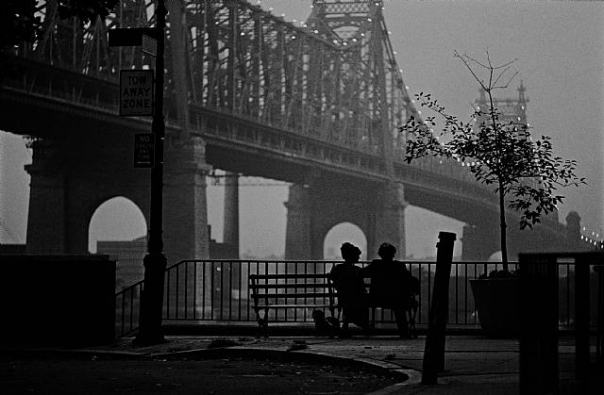
Of course, Woody Allen's masterpiece, shot in black and white and starring Diane Keaton, Mariel Hemingway, Meryl Streep and others. This is a movie I know long sections of almost by heart: that opening scene with the saxophone playing and Woody Allen's voiceover trying to get it right, the repartee with his ex-wife (who leaves him for another woman) and the amazing acting of a very young Hemingway who is uber-convincing as a highly intelligent yet still emotionally her age woman in love with the Allen character. Some gorgeous B&W shots of the Brooklyn Bridge and the streets of NYC.
Moonstruck
I haven't seen this movie in a long time but I love the images it still conjures up: Cher walking home in the early morning (what people of my generation called The Walk of Shame), her father sitting in his easy chair always listening to Vicki Carr, Olympia Dukakis as the mother. Great film.
After Hours
This was one of my favorite movies when I was in my 20s. Griffin Dunne (why did he never become a star) just trying to get home through the (rough) streets of New York. He tries to romance Roseanne Arquette (who lives with a sculptor though her entire life and character are just bizarre) but soon he realizes that's going nowhere and leaves. Through a series of misadventures, he loses all his money and is forced to make his way home on foot. Along the way he meets Teri Garr (who's hilarious as a waitress who hates her job) and is mistaken for a burglar and almost done in by a crazed mob. It's a hilarious film directed by Martin Scorsese.
Rear Window
Though there is nothing uniquely New York about it in some ways (you can tell it was filmed completely in a studio), the hardscrabble life of Nicky's neighbors and the glamour of Lisa (Grace Kelley) do seem uniquely New York.
Also: Dog Day Afternoon, Manhattan Murder Mystery, Tootsie, Do the Right Thing....
Manhattan
Of course, Woody Allen's masterpiece, shot in black and white and starring Diane Keaton, Mariel Hemingway, Meryl Streep and others. This is a movie I know long sections of almost by heart: that opening scene with the saxophone playing and Woody Allen's voiceover trying to get it right, the repartee with his ex-wife (who leaves him for another woman) and the amazing acting of a very young Hemingway who is uber-convincing as a highly intelligent yet still emotionally her age woman in love with the Allen character. Some gorgeous B&W shots of the Brooklyn Bridge and the streets of NYC.Moonstruck
I haven't seen this movie in a long time but I love the images it still conjures up: Cher walking home in the early morning (what people of my generation called The Walk of Shame), her father sitting in his easy chair always listening to Vicki Carr, Olympia Dukakis as the mother. Great film.
After Hours
This was one of my favorite movies when I was in my 20s. Griffin Dunne (why did he never become a star) just trying to get home through the (rough) streets of New York. He tries to romance Roseanne Arquette (who lives with a sculptor though her entire life and character are just bizarre) but soon he realizes that's going nowhere and leaves. Through a series of misadventures, he loses all his money and is forced to make his way home on foot. Along the way he meets Teri Garr (who's hilarious as a waitress who hates her job) and is mistaken for a burglar and almost done in by a crazed mob. It's a hilarious film directed by Martin Scorsese.Rear Window
Though there is nothing uniquely New York about it in some ways (you can tell it was filmed completely in a studio), the hardscrabble life of Nicky's neighbors and the glamour of Lisa (Grace Kelley) do seem uniquely New York.
Also: Dog Day Afternoon, Manhattan Murder Mystery, Tootsie, Do the Right Thing....
Labels:
cinema,
Martin Scorsese,
movies,
New York,
Woody Allen
Friday, December 21, 2012
Happy holidays!
We have started our holiday break and our offices are closed until January 3. I'll be working during the break, far too much to do in the next few months to take much time off but it's not bad work in the end so I'm not complaining. Plus something about working on the floor of the living room in between bouts of wrapping Christmas gifts and drinking eggnog makes it feel less like work...
I have several books to read for work but this week even have a few non-work books on my list including novel translated from Japanese, a murder mystery set in early 20th century Beijing, and a contemporary German novel.
Though none of these are really Christmas-y, every year we watch the following movies during the holidays:
The Princess Bride, When Harry Met Sally, Alice, The Double Life of Veronique and this amazing old Chinese animated feature called Princess Iron Fan. It's got the most unique and memorable animation (done in the early 1940s and one of China's first animated features ever made). Not sure how this list of non-Christmas Christmas movies developed but it's become a tradition around our house to break out the Christmas films and have them playing all week.
Best wishes, happy holidays and all the best for 2013!
I have several books to read for work but this week even have a few non-work books on my list including novel translated from Japanese, a murder mystery set in early 20th century Beijing, and a contemporary German novel.
Though none of these are really Christmas-y, every year we watch the following movies during the holidays:
The Princess Bride, When Harry Met Sally, Alice, The Double Life of Veronique and this amazing old Chinese animated feature called Princess Iron Fan. It's got the most unique and memorable animation (done in the early 1940s and one of China's first animated features ever made). Not sure how this list of non-Christmas Christmas movies developed but it's become a tradition around our house to break out the Christmas films and have them playing all week.
Best wishes, happy holidays and all the best for 2013!
Labels:
Christmas,
Christmas movies,
holidays,
movies
Sunday, November 18, 2012
Weekend by Andrew Haigh
Saw a great movie yesterday afternoon on Netflix, Weekend by Andrew Haigh. It's not a new movie, maybe a year old or so, but it was lovely, about two young men who meet in a bar in Notthingham and have a weekend together. It reminded me of Richard Linklater's Before Sunrise in some ways, that 1995 film (and its subsequent sequels) where two young people explore what it means to be themselves, to be looking for someone else, to be young (or in the case of Weekend, gay) in the world today. Andrew Haigh's film is better, though, and lacks the self-consciousness that Ethan Hawke and Julie Delpy need to make their characters convincing. (That said, Before Sunset, the second of Linklater's movies has one of the most amazing final scenes of just about any movie I've ever seen.)
As is my habit, I then read several reviews of the Haigh film which confirmed to me all the lovely complexities that the film explores. But mainly it's that final scene which stays with me and the light-handed touch of the director who never lets it drift into melancholy or cliche (though he does play with cinematic cliche in interesting ways). The emotional core of the film, which all comes together at the end, is terribly honest and moving.

What struck me, too, is how life is shown in such a realistic way: life as a series of conversations, some pleasant, some emotional, some tense, some banal, some irritating. And isn't that how we all get through life, drifting from one conversation to another? There are no "lessons" here, nothing didactic about playing witness to these two men falling in love and the limitations that are imposed on their relationship.
At any rate, it's a beautiful little movie with solid acting and writing, one of those movies that stays with you for days afterwards.
As is my habit, I then read several reviews of the Haigh film which confirmed to me all the lovely complexities that the film explores. But mainly it's that final scene which stays with me and the light-handed touch of the director who never lets it drift into melancholy or cliche (though he does play with cinematic cliche in interesting ways). The emotional core of the film, which all comes together at the end, is terribly honest and moving.

What struck me, too, is how life is shown in such a realistic way: life as a series of conversations, some pleasant, some emotional, some tense, some banal, some irritating. And isn't that how we all get through life, drifting from one conversation to another? There are no "lessons" here, nothing didactic about playing witness to these two men falling in love and the limitations that are imposed on their relationship.
At any rate, it's a beautiful little movie with solid acting and writing, one of those movies that stays with you for days afterwards.
Labels:
Andrew Haigh,
Before Sunrise,
British cinema,
Ethan Hawke,
Julie Delpy,
movies,
Richard Linklater,
Weekend
Subscribe to:
Posts (Atom)