Banquet in a couple hours' time to announce the winners of the Governor General's awards. I have to say that I really like the GG's. The books they pick are a broader representation of what Canadian writers are doing than other prize committees; they recognize genres that don't get as much attention in Canada or internationally (drama, illustration) and it's one of the rare times when French and English titles are put down alongside one another given there is a great deal of segregation in our language communities nationally (and even locally to some extent, a Festival like Blue Metropolis is one of the only places in the world where English and French are allowed to be in dialogue with one another!).
Some of my faves are (these are not necessarily my pics to win since I haven't read all the long-listed books. Plus I feel like I should remain relatively unbiased!):
ENGLISH (but only the categories I feel qualified to assess!):
Vincent Lam: The Headmaster's Wager (fiction)
David McGimpsey: Li'l Bastard (poetry)
James Pollock: Sailing to Babylon (poetry)
Nahlah Ayed: A Thousand Farewells (non-fiction)
Sheila Fischman (Kim Thuy): Ru (translation)
FRANÇAIS
Catherine Mavrikakis: Les derniers jours de Smokey Nelson (Romans et nouvelles)
France Daigle: Pour sûr (Romans et nouvelles)
Hélène Dorion: Coeurs, comme livres d'amour (poesie)
Pascal Riendeau: Méditation et vision de l'essai: Roland Barthes, Milan Kundera et Jacques Brault (Essais)
Lori Saint-Martin et Paul Gagné (Miriam Toews): Irma Voth (Traduction)
Lori Saint-Martin et Paul Gagné (Ann Charney): La petite cousin de Freud (Traduction)
I love David McGimpsey's book. And Nahlah Ayed's. And Catherine Mavrikakis is one of the most innovative writers working today.
Good luck to everyone! :)
Tuesday, November 13, 2012


Monday, November 12, 2012
"Light" Reading, Part I
From our Facebook page:
Can you recommend short (200 pages), amazingly good novels available in paperback? I have to be able to hold it and turn the pages with one hand while nursing!
Yes, naturally! For me the trick is the "amazingly good" part since one person's amazingly good might be another's snore-fest, but here is what I'd suggest today:
The NYRB classics line are often short novella-sized novels, always paperback, and generally fairly light (physically). These issues are very international in focus, usually translated from other languages and often contain introductions from some of the best-known contemporary writers working today. Also, the authors are generally no longer living so these are not as contemporary as some prefer.
 Stefan Zweig was one of the best-known German writers of the 20th century. He never really had a huge following in the English-speaking world until NYRB started re-translating (and translating for the first time) some of his better known works: Confusion, Beware of Pity, Chess, The Post-Office Girl are just a few of his titles. He is not a writer without controversy but he definitely presents a specific time and place in European history that is long gone.
A Time to Keep Silence by Patrick Leigh Fermor (the introduction is by Karen Armstrong, win-win!). One of the greatest travel writers, Fermor chronicles his travels through Europe at some well-known monasteries in search of silence and respite from our modern, chaotic lives.
Tove Jansson has some really lovely books that are fascinating portraits of Scandinavian childhoods spent on seashores and in forests. They are almost fairy-tale like (Jansson was the author of the very popular Moomin series of kids books). Two of her that I've read and enjoyed include The Summer Book and The True Deceiver.
 For crime-writing lovers, there's Georges Simenon. The NYRB almost single-handedly brought him back from (relative) obscurity in the English-speaking world and his works are dark, foreboding, psychologically complex and highly entertaining. Some good books by Simenon: Monsieur Monde Vanishes, Dirty Snow, Three Bedrooms in Manhattan.
Finally, there's Albert Cossery, a writer whose work I find to be highly influential and interesting. Born in Cairo of Greek and Lebanese extraction, Cossery lived most of his life in Paris and wrote novels, graphic novels, stories, journalistic pieces and many other forms of writing. Two of his books done by NYRB include Proud Beggars and The Jokers. I've written about another of his works before here.
This is just the tip of the iceberg when it comes to the excellent work the NYRB does in issuing and re-issuing some of the best of international literature.
For more contemporary books that can be held with just one hand, stay tuned later this week.
Can you recommend short (200 pages), amazingly good novels available in paperback? I have to be able to hold it and turn the pages with one hand while nursing!
Yes, naturally! For me the trick is the "amazingly good" part since one person's amazingly good might be another's snore-fest, but here is what I'd suggest today:
The NYRB classics line are often short novella-sized novels, always paperback, and generally fairly light (physically). These issues are very international in focus, usually translated from other languages and often contain introductions from some of the best-known contemporary writers working today. Also, the authors are generally no longer living so these are not as contemporary as some prefer.

A Time to Keep Silence by Patrick Leigh Fermor (the introduction is by Karen Armstrong, win-win!). One of the greatest travel writers, Fermor chronicles his travels through Europe at some well-known monasteries in search of silence and respite from our modern, chaotic lives.
Tove Jansson has some really lovely books that are fascinating portraits of Scandinavian childhoods spent on seashores and in forests. They are almost fairy-tale like (Jansson was the author of the very popular Moomin series of kids books). Two of her that I've read and enjoyed include The Summer Book and The True Deceiver.
 For crime-writing lovers, there's Georges Simenon. The NYRB almost single-handedly brought him back from (relative) obscurity in the English-speaking world and his works are dark, foreboding, psychologically complex and highly entertaining. Some good books by Simenon: Monsieur Monde Vanishes, Dirty Snow, Three Bedrooms in Manhattan.
Finally, there's Albert Cossery, a writer whose work I find to be highly influential and interesting. Born in Cairo of Greek and Lebanese extraction, Cossery lived most of his life in Paris and wrote novels, graphic novels, stories, journalistic pieces and many other forms of writing. Two of his books done by NYRB include Proud Beggars and The Jokers. I've written about another of his works before here.
This is just the tip of the iceberg when it comes to the excellent work the NYRB does in issuing and re-issuing some of the best of international literature.
For more contemporary books that can be held with just one hand, stay tuned later this week.
Saturday, November 10, 2012
The South by Colm Tóibín
It's Colm Tóibín's first novel, dating from 1990, and it was a lovely read. The South tells the story of a young Irish mother living in a village outside Dublin in the 1950s who suddenly decides to leave her husband and young son from whom she is disconnected.
 She goes to Spain, sets up with a Spanish painter and begins painting herself, becoming marginally embroiled in the politics the new Franco regime. Michael, the Irish man who lives there at the edges of the arts scene in Barcelona at first unsettles her (he claims to be from the same village she is from), acts almost as an internal voice in sections, mediating the exotic, passionate and often chaotic world of these artists who had put so much effort into defeating Franco. But Michael also acts as a foil for her Spanish artist, Miguel, in that he represents the constrained and restrained emotion that the Irish aren't given license to express (as openly as the passionate, fiery southerners). That said, Michael is more open than Katherine. He allows himself to be carried away by passions, by love of art and beauty in a way that's new to her.
What I like about Tóibín as a general rule is how straightforward his story-telling is. He doesn't get bogged down with long, lyrical passages or ornate descriptions of scenes or feelings. He tells the story in a very matter of fact way, though there is inordinate beauty in this as well. The beauty of Tóibín comes from small details. In a scene set at Katherine's mother's place in London after she has left her family, her mother (who many years before had left Katherine and Katherine's father, too, to follow her own identity) has some friends over, friends who've never been told about Katherine (or that she had any children):
As they stood in the kitchen when the guests had gone, Katherine asked her mother why she had told her friends that she had no children.
"I put that all behind me."
"It feels funny being written off like that."
"Yes, like walking out of the cinema, leaving it all behind, the big picture."
"Don't make jokes."
"Katherine, don't tell me what to do."
"Did I ever exist for you?"
"I got out of that place, and I put it behind me. It's what you're going to do, isn't it? Your father wouldn't come. I don't think you've consulted your spouse. Incidentally, he telephoned twice today."
"Tom?"
"He'll telephone again tomorrow. I told him I had been in touch with you and I would tell you."
"Tell him I've left," she said, and turned away.
It's such a simple scene on the surface: the emotion is very controlled. Neither wants to acknowledge the pain they have inflicted on others but both want their own pain acknowledged. Another writer would have dealt expressively with how Katherine was feeling, what she needed to get from her mother. But we get that only under the surface, only be reading between the words. The beauty is in the way they talk past each other, in that final detail when Katherine "turns away," which sounds almost biblical in its ability to both be understated but be quivering with emotion just under the surface.
In his more recent works, Tóibín still avoids dramatic scenes (and when there is something dramatic happening, it's often something that happens on the edge of the details we are given). In this day and age where every feeling and emotion is catalogued and analyzed, I love reading this kind of restrained sense of personal feeling.
She goes to Spain, sets up with a Spanish painter and begins painting herself, becoming marginally embroiled in the politics the new Franco regime. Michael, the Irish man who lives there at the edges of the arts scene in Barcelona at first unsettles her (he claims to be from the same village she is from), acts almost as an internal voice in sections, mediating the exotic, passionate and often chaotic world of these artists who had put so much effort into defeating Franco. But Michael also acts as a foil for her Spanish artist, Miguel, in that he represents the constrained and restrained emotion that the Irish aren't given license to express (as openly as the passionate, fiery southerners). That said, Michael is more open than Katherine. He allows himself to be carried away by passions, by love of art and beauty in a way that's new to her.What I like about Tóibín as a general rule is how straightforward his story-telling is. He doesn't get bogged down with long, lyrical passages or ornate descriptions of scenes or feelings. He tells the story in a very matter of fact way, though there is inordinate beauty in this as well. The beauty of Tóibín comes from small details. In a scene set at Katherine's mother's place in London after she has left her family, her mother (who many years before had left Katherine and Katherine's father, too, to follow her own identity) has some friends over, friends who've never been told about Katherine (or that she had any children):
As they stood in the kitchen when the guests had gone, Katherine asked her mother why she had told her friends that she had no children.
"I put that all behind me."
"It feels funny being written off like that."
"Yes, like walking out of the cinema, leaving it all behind, the big picture."
"Don't make jokes."
"Katherine, don't tell me what to do."
"Did I ever exist for you?"
"I got out of that place, and I put it behind me. It's what you're going to do, isn't it? Your father wouldn't come. I don't think you've consulted your spouse. Incidentally, he telephoned twice today."
"Tom?"
"He'll telephone again tomorrow. I told him I had been in touch with you and I would tell you."
"Tell him I've left," she said, and turned away.
It's such a simple scene on the surface: the emotion is very controlled. Neither wants to acknowledge the pain they have inflicted on others but both want their own pain acknowledged. Another writer would have dealt expressively with how Katherine was feeling, what she needed to get from her mother. But we get that only under the surface, only be reading between the words. The beauty is in the way they talk past each other, in that final detail when Katherine "turns away," which sounds almost biblical in its ability to both be understated but be quivering with emotion just under the surface.
In his more recent works, Tóibín still avoids dramatic scenes (and when there is something dramatic happening, it's often something that happens on the edge of the details we are given). In this day and age where every feeling and emotion is catalogued and analyzed, I love reading this kind of restrained sense of personal feeling.
Thursday, November 8, 2012
Richler and Valenzuela: two very different writers
First there's Nancy Richler, whose Giller-nominated novel, The Imposter Bride, from earlier this year I've been reading this week. It's an engaging story about surviving trauma and learning to forgive the past. When a young woman arrives in Montreal just after the war, it's clear to everyone around her that she has come out of something horrific. What struck me about these passages is how much the characters keep to themselves. I think today we have more impulse to share what we are feeling and thinking in order to help those around understand why we do (or don't do) the things we do.
But this mid-20th century family still guards their thoughts and feelings preciously and, as a result, the novel's plot moves forward. It veers towards the overly poetic at times (the sending of stones to Ruth every year on her birthday seems like a highly novelistic flourish) but it's a story which reminds us of the individual horrors that WWII brought to so many lives. Mothers who leave, secret traumas from the past, starting a new life and a new identity and the things we can't leave behind: all these themes are explored by the writer but in the end, we are left with a story that is hard to put down, hard to forget. Certain images have stayed with me for days and the shifting points of view created an important effect in that we never sense that feeling of claustrophobia we might have if we were only in Lily's head.
Though the book was nominated for the Giller, it didn't get as much buzz as it might have which is surprising since it's such a powerful story. She's a new writer to me but I am excited about having the chance to read her earlier work.
The other writer I've been thinking about is Argentine Luisa Valenzuela. She's getting on now in years but I find her work so unique and thoughtful. Though she might be called a "difficult" writer (see yesterday's post) her almost stream-of-consciousness narration is highly disciplined and very tightly woven into the fabric of history, particularly the recent history of Argentina.
 She breathes in huge gulps of her city's air, the verb a lie at the time, because the air had become unbreathable. With vandal-like delight she is disemboweling her library. Some books will have to disappear - the word alone produces goosebumps - others are simply dismantled in order to preserve this story or that essay or those three chapters that she knows she'll need for her course, or that she wants to keep with her in spite of the weight limit on planes. Get rid of everything to be able to leave as lightly as possible. She knows that if she stays in her own country, she won't write anymore. She can't show her latest work to anyone. She's afraid of putting those readers in danger (from "Getting Ready to Jump," in the collection Dark Desires and the Others).
What strikes me about this passage is how openly she references the politics in one way but how cloaked her allusions are in another way. Valenzuela has said that she avoids writing about "the message" of politics and this to me seems like a fair way to approach this topic. (It also reminds me of a Slate article over the weekend on the work of Barbara Kingsolver. Is the writer - either Kingsolver herself or Michelle Dean the Slate writer - confusing the issue with the message?) Otherwise, writing (or any art) becomes dated very quickly.
Valenzuela's work is fascinating and a writer I'd love to see in person sometime.
A great interview with Luisa Valenzuela here from the Paris Review Writers Series.
But this mid-20th century family still guards their thoughts and feelings preciously and, as a result, the novel's plot moves forward. It veers towards the overly poetic at times (the sending of stones to Ruth every year on her birthday seems like a highly novelistic flourish) but it's a story which reminds us of the individual horrors that WWII brought to so many lives. Mothers who leave, secret traumas from the past, starting a new life and a new identity and the things we can't leave behind: all these themes are explored by the writer but in the end, we are left with a story that is hard to put down, hard to forget. Certain images have stayed with me for days and the shifting points of view created an important effect in that we never sense that feeling of claustrophobia we might have if we were only in Lily's head.
Though the book was nominated for the Giller, it didn't get as much buzz as it might have which is surprising since it's such a powerful story. She's a new writer to me but I am excited about having the chance to read her earlier work.
The other writer I've been thinking about is Argentine Luisa Valenzuela. She's getting on now in years but I find her work so unique and thoughtful. Though she might be called a "difficult" writer (see yesterday's post) her almost stream-of-consciousness narration is highly disciplined and very tightly woven into the fabric of history, particularly the recent history of Argentina.
She breathes in huge gulps of her city's air, the verb a lie at the time, because the air had become unbreathable. With vandal-like delight she is disemboweling her library. Some books will have to disappear - the word alone produces goosebumps - others are simply dismantled in order to preserve this story or that essay or those three chapters that she knows she'll need for her course, or that she wants to keep with her in spite of the weight limit on planes. Get rid of everything to be able to leave as lightly as possible. She knows that if she stays in her own country, she won't write anymore. She can't show her latest work to anyone. She's afraid of putting those readers in danger (from "Getting Ready to Jump," in the collection Dark Desires and the Others).What strikes me about this passage is how openly she references the politics in one way but how cloaked her allusions are in another way. Valenzuela has said that she avoids writing about "the message" of politics and this to me seems like a fair way to approach this topic. (It also reminds me of a Slate article over the weekend on the work of Barbara Kingsolver. Is the writer - either Kingsolver herself or Michelle Dean the Slate writer - confusing the issue with the message?) Otherwise, writing (or any art) becomes dated very quickly.
Valenzuela's work is fascinating and a writer I'd love to see in person sometime.
A great interview with Luisa Valenzuela here from the Paris Review Writers Series.
Wednesday, November 7, 2012
German Crime Series: screening at the Goethe Institute
Thursday night (tomorrow, the 8th of November) at the new Goethe Institute in Montreal (St-Laurent and Ontario, just a block north of St-Laurent metro station) there will be a screening of a German television series that caused quite a sensation when it was screened in Germany as part of the Berlin Film Festival a couple of years ago. The series is comprised of 10 episodes and entitled In the Face of Crime (Im Angesicht des Verbrechens). Many critics called it a masterpiece though the director's name, Dominik Graf, isn't widely known outside of Germany. According to several articles and critics' responses (including this one here) that's largely because Graf writes for television which naturally has a much smaller international audience and often falls off the circuit for international film festival screenings.
But let's not forget that even cinematic geniuses like Kieslowski started on television (if you haven't seen his 10 episode series, The Decalogue, made for Polish television in the 1980s, you are missing out!) and today the talk around the water cooler is much more often around television than it is about movies. (I'm always amazed at how much of my conversations with friends relates to TV when almost none of us actually watch television shows on TV but instead on DVD or Netflix or iTunes or the PC: talking about Breaking Bad, Downton Abbey, The Big C, Weeds, Treme, The Wire, etc., etc.).
 As I noted earlier this week, it used to be that television was looked down upon and I remember when I was an undergraduate, there were no television shows that were considered even halfway decent for polite society! Nowadays television is, by and large, much more interesting and engaging than big American movies.
Be all that as it may, In the Face of Crime, the German series, shows the lives and work of two Berlin police officers as they navigate the German underworld, spotlighting Russian gangs, sex trafficking and other issues major urban centres around the world are forced to deal with today. I've not seen it but definitely going to go check it out.
It plays Thursday and Friday nights at the Goethe Institute in downtown Montreal. It's $3 to get in (free to friends of the Instiute) and each episode is about one hour long (so two episodes per evening). The screening is in German with English subtitles. Bring some friends. Might be a new show to discuss around the water cooler!
But let's not forget that even cinematic geniuses like Kieslowski started on television (if you haven't seen his 10 episode series, The Decalogue, made for Polish television in the 1980s, you are missing out!) and today the talk around the water cooler is much more often around television than it is about movies. (I'm always amazed at how much of my conversations with friends relates to TV when almost none of us actually watch television shows on TV but instead on DVD or Netflix or iTunes or the PC: talking about Breaking Bad, Downton Abbey, The Big C, Weeds, Treme, The Wire, etc., etc.).

Be all that as it may, In the Face of Crime, the German series, shows the lives and work of two Berlin police officers as they navigate the German underworld, spotlighting Russian gangs, sex trafficking and other issues major urban centres around the world are forced to deal with today. I've not seen it but definitely going to go check it out.
It plays Thursday and Friday nights at the Goethe Institute in downtown Montreal. It's $3 to get in (free to friends of the Instiute) and each episode is about one hour long (so two episodes per evening). The screening is in German with English subtitles. Bring some friends. Might be a new show to discuss around the water cooler!
QWF 2012 Awards: Readings
QWF awards event was last night and I saw some excellent readers feature their own work:

 Tom Abray read from his book of short stories, Pollen, several of which I still recall though I read the book last year (or very early this year). His characters are engaging and find themselves in situations that we can almost all relate to (trying to find a daycare for their kid, doing some half-ass renovation project while spending the weekend alone at home). He's a good reader, too, and I wish writers of short stories generally could make a living at their craft because Abray, though young, seems to have a real gift for the short story.

Taras Grescoe read from Straphanger which is a fascinating book on the role that the automobile has played in our cities for far too long. In the book, Grescoe travels to 14 cities around the world and explores what they are doing right and how they could make their cities better, more egalitarian and more people-friendly. It's a hard sell, particularly to North Americans who are so largely attached to their cars and driving. But for those of us who don't own a car (I haven't had a car since I was 20 years old and at the time I sold it because I never drove it), Grescoe's thesis is so intuitive: the car has its place but cities would be better if the car had a diminished role in them. More than the above, Grescoe is just an engaging and intelligent writer and the book was one I had a hard time putting down.
Also heard Julija Sukys reading from her book Epistophilia, a biography in letters of a librarian who saved countless Jews from extermination while quietly working at a library in the Lithuanian capital, smuggling food and supplies in and out of the Jewish Ghetto. I really enjoyed reading this book, not only because I think the city of Vilnius, Lithuania is one of the most fascinating cities in the world (small, not much happens there, but a rich history and incredibly beautiful) but also because I am all for books which bring an unknown person's story to light, show us someone who should be remembered.
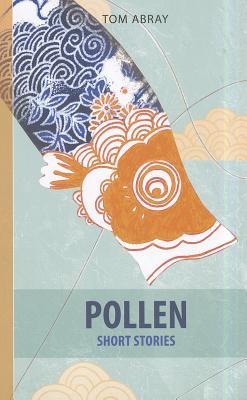 Tom Abray read from his book of short stories, Pollen, several of which I still recall though I read the book last year (or very early this year). His characters are engaging and find themselves in situations that we can almost all relate to (trying to find a daycare for their kid, doing some half-ass renovation project while spending the weekend alone at home). He's a good reader, too, and I wish writers of short stories generally could make a living at their craft because Abray, though young, seems to have a real gift for the short story.
I heard Alice Petersen read from her collection, All the Voices Cry, though I'd heard her read maybe 18 months ago from her book before it was published. Her stories are simply amazing: Petersen comes from New Zealand originally and she has this exotic distance in her language that is quite distinct and unique from other Canadian writers. Her stories are rich with humour and wit. I see a bright future for Petersen.
There were several writers there whose readings I missed because I came late (TD Children's Literary Award Banquet) but the entire roster of 2012 QWF awards can be found here (PDF). Some excellent work being done by our local Quebec Anglophone writers and very happy to be a part of the booming and successful community of creative and intelligent writers.
Tuesday, November 6, 2012
On Difficult Books
I had a professor once in graduate school who used the word "accessible" to insult a writer's work. This tendency in certain circles that books must be dense, difficult to read, complex was one of the most annoying things, in fact, about graduate school. This doesn't refer to advanced vocabulary or overly complicated plots, but to works that, in fact, may have no plot. Or that intentionally obfuscate. It used to irk me when he'd dismiss a book by simply asserting that it was "simplistic" as if complexity made for a good read. This was true of not only fiction but of literary criticism or theory. And, let's face it, a big chunk of literary theory that has been so fashionable in the last generation is simply bad writing. Perhaps the writer has some novel or fascinating idea but the idea should be clear.
I am of the school of straightforwardness. I don't have any issue with books that have unusual form or where the author's ideas on a topic are integrated into the plotting. But I detest books whose soul aim is to show off how smart the author thinks he is. Or "creative." A novel should essentially be a good story in my view and that doesn't mean the author can't take risks (he should, in fact) or can't play with form or style or do something new or unusual. But that should always be in service to the story, in my view. And there certainly are "simplistic" books (the story has no dimension to it, the themes or ideas are pat or trite).
That said, certain popular critics often dismiss a writer's work as "unreadable" or a "hard read" which I often find curious. When people call Kazuo Ishiguro's "hard" I don't see it. Though some of his books (like The Unconsoled) don't really have a straightforward plot, the language is fairly clear and straightforward. Virginia Woolf is another author often put in this camp. Or Borges.
I was very surprised that some people called Jenny Erpenbeck's book Visitation "undeniably difficult" which I definitely deny. Again, if one sits down with every book and excepts a straightforward sort of plotting arc, perhaps that's where one senses the challenge. But having read enough German literature (another author called difficult is Herte Mueller, and though that word might cover one aspect of her, it doesn't cover her writing!), I guess one comes to except a certain kind of approach. Same with Argentine writers.
I wonder if the rift between what academics find "good" and what the public find "good" has to do with the breakdown of high vs low culture. When I first started my undergraduate degree, I think, the remnants of this distinction were still visible but just barely: TV was still widely treated with disdain, popular writers were totally ignored (you'd never be caught dead with any living author who'd ever had a best-seller and, in fact, "best-seller" was an insult), but slowly this distinction has blurred. That's not to say that there aren't popular writers who are ignored in academia or "respectable" literary institutions: many are. But popular success doesn't necessarily mean a work is instantly trash. In fact, I've heard many people, many serious readers, say that they read Twilight or Fifty Shades simply because they wanted to see what the buzz was all about, they wanted to understand what these books' popularity said about our culture today, etc. Yes, they ultimately trashed the books but the assumption was that even trash should be part of the conversation in understanding where we are as a society of readers today...
I guess I wouldn't go so far as to read that kind of work mainly because I have so many other books vying for my attention. Good books. And difficult ones.
 |
| Not difficult. |
That said, certain popular critics often dismiss a writer's work as "unreadable" or a "hard read" which I often find curious. When people call Kazuo Ishiguro's "hard" I don't see it. Though some of his books (like The Unconsoled) don't really have a straightforward plot, the language is fairly clear and straightforward. Virginia Woolf is another author often put in this camp. Or Borges.
I was very surprised that some people called Jenny Erpenbeck's book Visitation "undeniably difficult" which I definitely deny. Again, if one sits down with every book and excepts a straightforward sort of plotting arc, perhaps that's where one senses the challenge. But having read enough German literature (another author called difficult is Herte Mueller, and though that word might cover one aspect of her, it doesn't cover her writing!), I guess one comes to except a certain kind of approach. Same with Argentine writers.
I wonder if the rift between what academics find "good" and what the public find "good" has to do with the breakdown of high vs low culture. When I first started my undergraduate degree, I think, the remnants of this distinction were still visible but just barely: TV was still widely treated with disdain, popular writers were totally ignored (you'd never be caught dead with any living author who'd ever had a best-seller and, in fact, "best-seller" was an insult), but slowly this distinction has blurred. That's not to say that there aren't popular writers who are ignored in academia or "respectable" literary institutions: many are. But popular success doesn't necessarily mean a work is instantly trash. In fact, I've heard many people, many serious readers, say that they read Twilight or Fifty Shades simply because they wanted to see what the buzz was all about, they wanted to understand what these books' popularity said about our culture today, etc. Yes, they ultimately trashed the books but the assumption was that even trash should be part of the conversation in understanding where we are as a society of readers today...
I guess I wouldn't go so far as to read that kind of work mainly because I have so many other books vying for my attention. Good books. And difficult ones.
Subscribe to:
Posts (Atom)